Burnie Academy
1255 short, honest guides to Indian food and weight loss. No fake precision — every calorie figure traces to a named source.
Read. Ask. Save.
See the app guide for asking about articles, liking useful reads and saving them for later.
Read every article for free
Register with your mobile number and OTP. Use the same number in the Burnie app to keep your profile, likes and favourites together.
 Karva Chauth: the after-fast feast that quietly adds up
You fasted all day with love, but the after-fast feast can give back every calorie the fast took away. The kind fix is how you break it - a few small swaps take a 1370 kcal feast down to about 780.
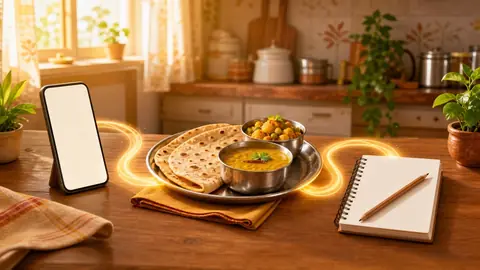 The little snacks between meals that quietly wreck your day
Four small bites between your meals add up to about 530 kcal a day, close to 2 kg in a month. Two simple swaps - thick dahi for the fried namkeen, and one rusk not two - take the same grazing day down to about 360 kcal.
Office party food - how do I build a smart plate?
An office party plate of paneer butter masala, two butter naan, a gulab jamun and a cola runs close to 1,440 kcal. Share the curry, take one naan and swap the cola for water, and the same kind of plate drops to roughly 720-1,100 kcal.
Onam sadya on a banana leaf - how to keep it light
A full Onam sadya is many small katoris on one banana leaf, and it can quietly add up to about 1000 kcal. The heavy hitters are the payasam, the banana chips, and the ghee and coconut milk hiding in the curries - not the rice or the sambar.
Period cravings are real - why they hit and what helps
Before your period, your body genuinely asks for more food - studies show women eat about 168 extra kcal a day in those two weeks. The kilos you see on the scale are mostly water, not fat, and they go away when your period ends.
Potluck dinner: build one plate that stays in your budget
A potluck plate can quietly climb past 1700 kcal when you take a little of everything. Build it with one carb, a half katori of the rich curry, and one shared sweet, and the same plate lands near 790.
Protein keeps you full - here's the honest reason
Protein really does fill you more than carbs or fat - a real study of 38 foods put protein-rich foods at the top for fullness and fat-rich foods at the bottom. Add easy Indian picks like eggs, dal, paneer or chicken to your plate and that 4pm hunger starts to fade.
Road trip food - the smarter dhaba stops
Two aloo paratha with butter and sweet chai at a dhaba can run close to 825 kcal. Smarter picks like one paratha, or tandoori roti with dal, cut that almost in half.
A glass of water before meals - does it really work?
Drinking water before a meal does cut how much you eat, but only a little, and mostly if you are over 55. The saving is about one roti's worth of calories at a meal, and over three months it can add about 2 kg of extra weight loss.
 When aunty forces food - kind ways to say no
Saying no to aunty feels rude, but one extra helping at a family dinner can add about 840 kcal to your day. You can hold your line with warm words and small plates, and still show love without eating everything on offer.
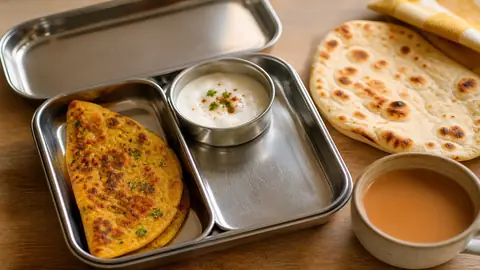 Always hungry on your diet? Here is why and the fix
You cut your food way down and feel starving all day, but that hunger usually means you cut too much, and it can slow your weight loss. The fix is not less food; it is more protein and fibre, like a besan chilla and dahi, for just a few extra calories.
 Not hungry? How to stop eating from boredom at home
Boredom, not hunger, sends you to the kitchen again and again. A bored evening of namkeen, biscuits and Maggi can quietly add about 700 kcal - here is how to spot the difference and break the loop.
Coconut milk curries - the rich catch hiding in your bowl
A katori of rich coconut-milk curry is about 340 kcal, and almost all of it comes from the coconut fat. Swap to light coconut milk or dilute it with water, and the same bowl drops to about 210 kcal.
Cream and malai in gravy - the silent 100 kcal add
A swirl of cream or malai on top of your curry looks tiny, but it quietly adds about 100 kcal and 11 g of fat to a bowl that is already rich. Swapping that swirl for milk whisked into the gravy cuts most of that silent add without losing the creamy feel.
Dahi marinade: soft, tasty, and lighter than cream
Cream marinades taste rich but pile on fat-heavy calories. A dahi marinade gives you the same soft, tasty bite for about a quarter of the calories.
Ghee or oil - which is better for cooking?
Ghee and cooking oil are both almost pure fat, so one spoon of either is about 130-135 kcal - a spoon is a spoon. Pick the taste you love, but measure it, because the calories come from how much you pour, not which jar it came from.
 How fast should I lose weight? The honest pace
Safe weight loss is slow weight loss - about 0.5 to 1 kg a week, or a 550 to 1100 kcal daily cut. Faster drops are mostly water at first, and your body fights back hard, so the weight usually returns.
Your katori is the portion - size it right
A bigger katori quietly makes you eat more, so a big bowl of dal can hold nearly three times the calories of a small one. Pick one katori size for served foods and you fix the portion without any counting.
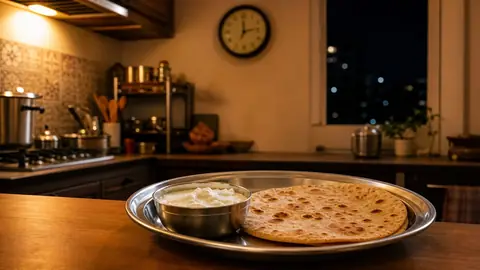 Late-night hunger - is it real or just a habit?
That 10 pm fridge visit is usually habit or a dinner that was too small, not true hunger. Pick a small, real-food snack and you fix it without blowing your whole day.
Measure oil with a spoon, not your eyes
Free-pouring cooking oil always gives you more than you meant to add, and oil is almost pure fat at about 884 kcal per 100 g. A measured tablespoon is about 120 kcal, but a quick glug from the bottle can quietly double or triple that, so use a spoon and stay in control.
Non-stick pans - how much oil do they really save?
A normal home sabzi cooked in a steel kadai soaks up about 3 tablespoons of oil, which is roughly 370 kcal just for the cooking oil. The same sabzi in a non-stick pan needs only about 1 teaspoon, so you save close to 330 kcal per dish, but the pan needs gentle care to last.
Pressure-cook your dal: big flavour, zero oil
A pressure cooker tenderizes dal and rajma with just water and steam, so you can skip the oil or ghee tadka. That one swap takes a bowl of dal fry from about 245 kcal down to about 180 kcal with the same spices.
Reusing frying oil — what really changes for your health
Reheating the same cooking oil does not add calories, but it builds up harmful compounds linked to heart and liver disease. Using fresh oil in a smaller amount keeps the taste and protects your health.
Roast or fry spices - same flavour, less oil
A fried tadka of spices gets its calories from the oil or ghee, not the spices - a 2-tablespoon pour is about 250 kcal. Dry-roast the same spices in a hot pan and you keep the aroma, cut the pour to a teaspoon, and save about 200 kcal.
Ate salty food and woke up heavier? It's water, not fat
Salt pulls water into your body, so a salty meal can push the scale up by 1-2 kg for a day or two. That jump is water holding zero calories, not real fat, and it leaves on its own.
Craving salty food - what your body really wants
That sudden urge for namkeen or chips is almost never a real salt shortage - true salt deficiency is rare, and most of us already eat far too much salt. It usually means habit, stress, poor sleep, or boredom, so try water first and keep the salty snack small.
Same weight but looking slimmer - how that works
The scale can stay stuck while you look leaner, because muscle is denser than fat and water weight hides real fat loss. A kilo of muscle takes less space than a kilo of fat, so you shrink even when your weight holds.
Stress eating at work? It's the office snack trap
Work stress makes your body pump out cortisol, and that hormone makes you hungry for snacks. Your 4pm desk raid of biscuits, namkeen, and sweet chai runs about 315 kcal - two small swaps bring it under 250.
Sugar hidden in cooking - which dishes have a sweet side?
A lot of Indian daals and snacks carry a hidden spoon of sugar - roughly 20 to 50 extra kcal a day you barely taste. Cut that spoon in half and you quietly save about 1 kg of body fat over a year.
Why you always want something sweet after a meal
That urge for a sweet after lunch and dinner is real. Your tongue gets tired of salty food and still has room for sweet — and a small swap like fruit quietly breaks the habit.