Burnie Academy
1255 short, honest guides to Indian food and weight loss. No fake precision — every calorie figure traces to a named source.
Read. Ask. Save.
See the app guide for asking about articles, liking useful reads and saving them for later.
Read every article for free
Register with your mobile number and OTP. Use the same number in the Burnie app to keep your profile, likes and favourites together.
 Why your body burns less as you diet (adaptive thermogenesis)
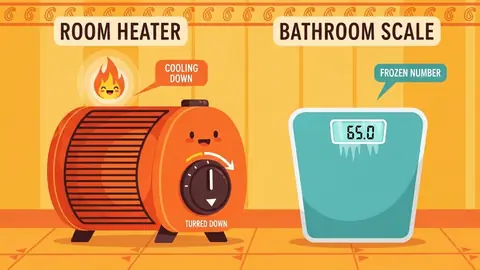
You were losing well, then the scale stuck even though you ate the same. Your body quietly turned down its burn beyond what your smaller size explains. This normal slowdown is called adaptive thermogenesis, and it is not damage.
Why your body burns less as you diet (adaptive thermogenesis)
You were losing well, then the scale stuck even though you ate the same. Your body quietly turned down its burn beyond what your smaller size explains. This normal slowdown is called adaptive thermogenesis, and it is not damage.
 What your smartwatch calls your BMR (and why it is a guess)
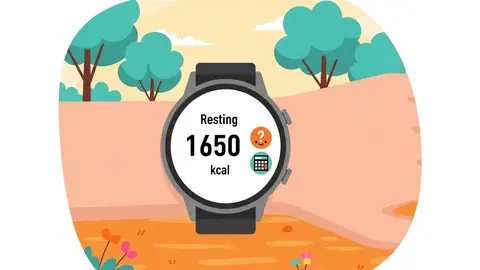
Your smartwatch shows a big 'resting calories' number and calls it your BMR. That number is not measured by your pulse. It is a formula guess made from your age, weight, height, and sex. Here is why it wobbles and how to use it well.
What your smartwatch calls your BMR (and why it is a guess)
Your smartwatch shows a big 'resting calories' number and calls it your BMR. That number is not measured by your pulse. It is a formula guess made from your age, weight, height, and sex. Here is why it wobbles and how to use it well.
 Same weight, different burn: why your numbers are yours
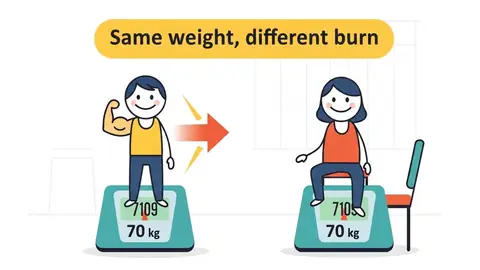
You and your friend can weigh the same and still burn different calories. Muscle, daily movement, age and your body's own wiring set your number, so you should never copy a friend's deficit.
Same weight, different burn: why your numbers are yours
You and your friend can weigh the same and still burn different calories. Muscle, daily movement, age and your body's own wiring set your number, so you should never copy a friend's deficit.
 A simple four-week walking plan to lose weight
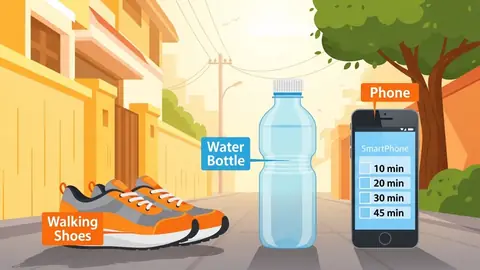
Walking is the easiest way to widen your calorie deficit, but starting too hard breaks the habit. This four-week plan begins at ten minutes a day and builds to forty-five, so you reach the 150-minute weekly target without burning out.
A simple four-week walking plan to lose weight
Walking is the easiest way to widen your calorie deficit, but starting too hard breaks the habit. This four-week plan begins at ten minutes a day and builds to forty-five, so you reach the 150-minute weekly target without burning out.
 Calorie cycling: some days high, some days low, same week
Calorie cycling means you eat a little more on some days and a little less on others, but you keep the same weekly total. It does not burn extra fat on its own. It just fits your life better on busy workout days and quiet rest days.
Calorie cycling: some days high, some days low, same week
Calorie cycling means you eat a little more on some days and a little less on others, but you keep the same weekly total. It does not burn extra fat on its own. It just fits your life better on busy workout days and quiet rest days.
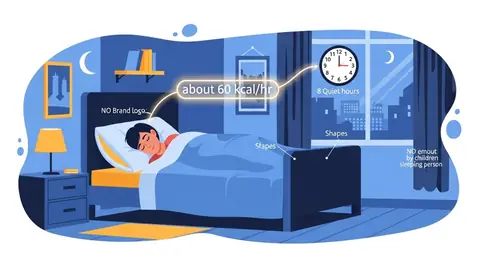 Do you burn calories while you sleep? Yes — the honest maths
Yes, you burn calories all night long. Your body's resting burn runs every hour of the day, so sleep still counts toward your Burnie deficit. Here is the simple maths behind the night burn.
Do you burn calories while you sleep? Yes — the honest maths
Yes, you burn calories all night long. Your body's resting burn runs every hour of the day, so sleep still counts toward your Burnie deficit. Here is the simple maths behind the night burn.
 Signs your calorie deficit is too aggressive
Cut your food too hard and your body fires warning lights — hunger, hair fall, cold hands, missed periods, and broken sleep. A safe drop is about 1 to 2 pounds a week, and Burnie is the FREE notebook that shows your calorie gap.
Signs your calorie deficit is too aggressive
Cut your food too hard and your body fires warning lights — hunger, hair fall, cold hands, missed periods, and broken sleep. A safe drop is about 1 to 2 pounds a week, and Burnie is the FREE notebook that shows your calorie gap.
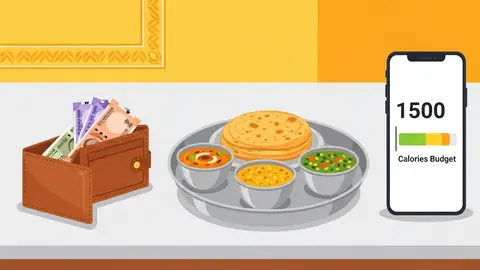 Treat your calorie deficit like your monthly budget
Your calorie deficit works like your monthly money budget. Calories in are your income, calories burned are your spending, and the leftover is fat lost, not cash.
Treat your calorie deficit like your monthly budget
Your calorie deficit works like your monthly money budget. Calories in are your income, calories burned are your spending, and the leftover is fat lost, not cash.
 Deficit stopped working? Here is the fix order
The scale can sit flat for weeks even when you log with care. The fix has an order to it. You check your logging first, then your maths, then you make one small move.
Deficit stopped working? Here is the fix order
The scale can sit flat for weeks even when you log with care. The fix has an order to it. You check your logging first, then your maths, then you make one small move.
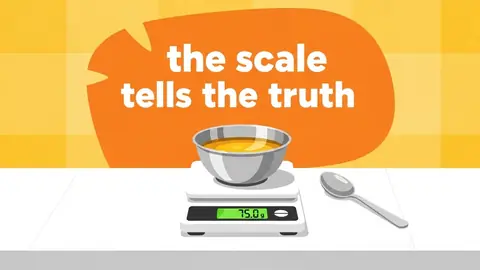 Why your kitchen scale is your most honest tool
Your measuring spoons and cups quietly lie. The same tablespoon can hold almost double the food when it is heaped, so a cheap digital scale is the one tool that always tells you the real number.
Why your kitchen scale is your most honest tool
Your measuring spoons and cups quietly lie. The same tablespoon can hold almost double the food when it is heaped, so a cheap digital scale is the one tool that always tells you the real number.
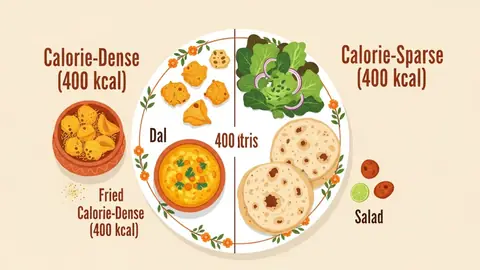 Calorie density vs count: why the same number feels different
Two meals can show the same calorie number in Burnie but fill your stomach very differently. Calorie density - the calories packed into each gram - explains why one leaves you hungry and one leaves you full.
Calorie density vs count: why the same number feels different
Two meals can show the same calorie number in Burnie but fill your stomach very differently. Calorie density - the calories packed into each gram - explains why one leaves you hungry and one leaves you full.
 Calorie maths when breastfeeding: milk costs about 500 a day
Your body works hard to turn food into milk for your baby, and that work burns about 450 to 500 extra calories a day. So your weight-loss maths changes. You eat a little more, you lose slowly, and you never diet hard while you are nursing.
Calorie maths when breastfeeding: milk costs about 500 a day
Your body works hard to turn food into milk for your baby, and that work burns about 450 to 500 extra calories a day. So your weight-loss maths changes. You eat a little more, you lose slowly, and you never diet hard while you are nursing.
 How alcohol calories fit into your deficit
Alcohol gives 7 kcal per gram, almost as much as fat, and it makes you eat more food too. Learn how to fit your weekly drinks into the Burnie deficit maths without giving them up.
How alcohol calories fit into your deficit
Alcohol gives 7 kcal per gram, almost as much as fat, and it makes you eat more food too. Learn how to fit your weekly drinks into the Burnie deficit maths without giving them up.
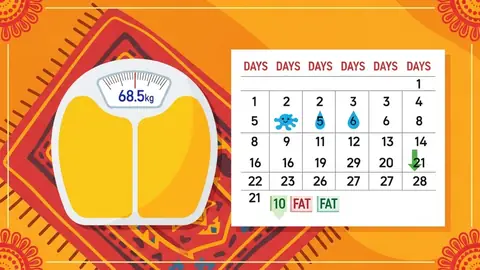 How many days until real fat loss shows on the scale
You log every meal for days and the scale barely moves. The first ten to fourteen days are mostly water noise, not fat. Here is the maths of the wait, and what to do while the scale catches up.
How many days until real fat loss shows on the scale
You log every meal for days and the scale barely moves. The first ten to fourteen days are mostly water noise, not fat. Here is the maths of the wait, and what to do while the scale catches up.
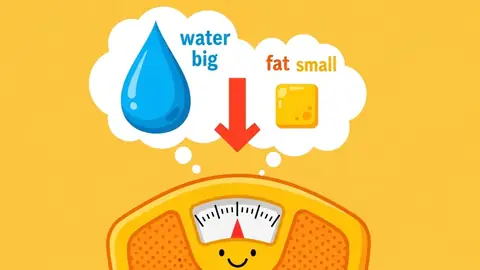 How much of week-one weight loss is really just water
That big week-one drop feels like magic, but most of it is water leaving with stored sugar. Here is the kilo-by-kilo maths of what leaves, and why cutting rotis makes the scale drop faster without extra fat.
How much of week-one weight loss is really just water
That big week-one drop feels like magic, but most of it is water leaving with stored sugar. Here is the kilo-by-kilo maths of what leaves, and why cutting rotis makes the scale drop faster without extra fat.
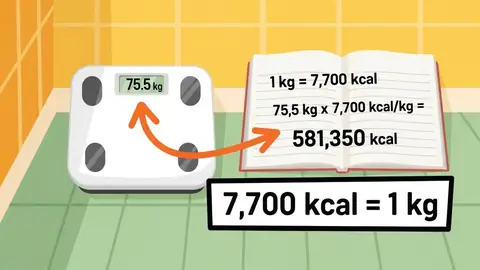 How to back-calculate your real deficit from the scale
You logged a 500 kcal deficit, but the scale barely moved. The fix is reverse maths. Turn your weekly weight change into the deficit you actually ran, and read the honest gap between your plan and your body.
How to back-calculate your real deficit from the scale
You logged a 500 kcal deficit, but the scale barely moved. The fix is reverse maths. Turn your weekly weight change into the deficit you actually ran, and read the honest gap between your plan and your body.
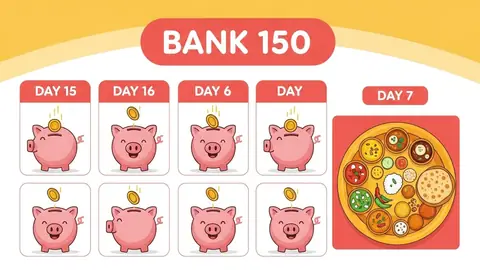 How to save calories all week for one big feast
A wedding or festival feast does not have to break your diet. Bank 100 to 200 kcal on each quiet day, and the big meal fits inside your weekly total without skipping lunch or guilt.
How to save calories all week for one big feast
A wedding or festival feast does not have to break your diet. Bank 100 to 200 kcal on each quiet day, and the big meal fits inside your weekly total without skipping lunch or guilt.
 How to work out calories per serving in any recipe
You cooked a big pot of dal for the whole family, and now you want the calories in just your one bowl. The trick is simple maths: add every ingredient's calories, then divide by the number of bowls you serve.
How to work out calories per serving in any recipe
You cooked a big pot of dal for the whole family, and now you want the calories in just your one bowl. The trick is simple maths: add every ingredient's calories, then divide by the number of bowls you serve.
 Why liquid calories are the easiest to miss
Liquid calories are the calories you drink, not eat — your chai, lassi, juice and alcohol. They slip down fast, never fill you up, and are the easiest calories to miss in your Burnie log. Here is how to count every glass honestly so your deficit stops lying to you.
Why liquid calories are the easiest to miss
Liquid calories are the calories you drink, not eat — your chai, lassi, juice and alcohol. They slip down fast, never fill you up, and are the easiest calories to miss in your Burnie log. Here is how to count every glass honestly so your deficit stops lying to you.
 How to guess a portion with your hand — no scale
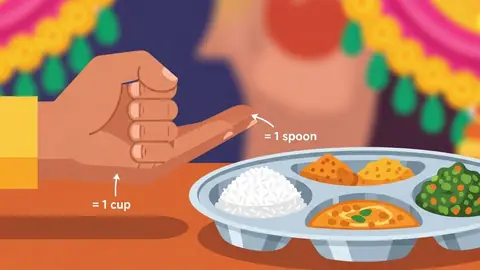
You do not need a kitchen scale at every meal. Your hand is a built-in ruler — a fist is close to one cup, and a thumb tip is close to one teaspoon. That is enough to log an honest portion anywhere, then let Burnie do the maths.
How to guess a portion with your hand — no scale
You do not need a kitchen scale at every meal. Your hand is a built-in ruler — a fist is close to one cup, and a thumb tip is close to one teaspoon. That is enough to log an honest portion anywhere, then let Burnie do the maths.
 Rest day calories: keep food steady, skip the panic
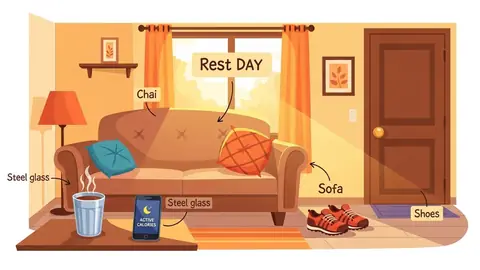
On a rest day your workout burn drops away, so your total burn dips a little, not a lot. Most of your burn is BMR, and it does not take a day off. Keep your food about the same, trim only slightly, and trust the weekly deficit.
Rest day calories: keep food steady, skip the panic
On a rest day your workout burn drops away, so your total burn dips a little, not a lot. Most of your burn is BMR, and it does not take a day off. Keep your food about the same, trim only slightly, and trust the weekly deficit.
 Can you keep a deficit without counting every calorie
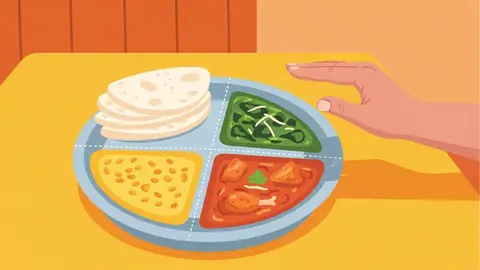
You do not have to count every bite to stay in a deficit. Use your hand and your plate most days, then let the weekly weigh-in tell you when to count for a week.
Can you keep a deficit without counting every calorie
You do not have to count every bite to stay in a deficit. Use your hand and your plate most days, then let the weekly weigh-in tell you when to count for a week.
 How to pick a daily calorie target you can keep
Most people pick a calorie target from ambition, then quit in a week. The trick is to start at TDEE minus 500 and let the scale tell you whether to trim or add. Here is how to find the number you will actually keep.
How to pick a daily calorie target you can keep
Most people pick a calorie target from ambition, then quit in a week. The trick is to start at TDEE minus 500 and let the scale tell you whether to trim or add. Here is how to find the number you will actually keep.
 Two weeks in: how to read your deficit numbers
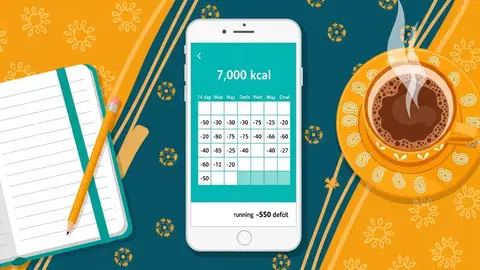
You have 14 daily deficit numbers sitting in Burnie. Here is the simple maths to turn them into one honest guess of the fat you lost, and how to read the gap when the scale says something different.
Two weeks in: how to read your deficit numbers
You have 14 daily deficit numbers sitting in Burnie. Here is the simple maths to turn them into one honest guess of the fat you lost, and how to read the gap when the scale says something different.
 How your BMR changes after forty (and what doesn't)
Turning forty does not crash your metabolism the way most people think. Your cell burn barely moves — the real drop comes from lost muscle and less daily movement, and both are fixable.
How your BMR changes after forty (and what doesn't)
Turning forty does not crash your metabolism the way most people think. Your cell burn barely moves — the real drop comes from lost muscle and less daily movement, and both are fixable.
 Is a 1,000-calorie deficit ever safe
A 1,000-calorie deficit sounds like a fast track to slim. For most people it is too big, and only a doctor should ever put you on one. Here is how to tell if that number fits you.
Is a 1,000-calorie deficit ever safe
A 1,000-calorie deficit sounds like a fast track to slim. For most people it is too big, and only a doctor should ever put you on one. Here is how to tell if that number fits you.
 Eat back your workout calories? Mostly no, sometimes half
Your watch flashes a happy burn number and asks for a bigger dinner. Trackers can be off by 27 to 93 percent, and your body quietly eats the rest. The honest rule is simple: eat back none, or at most half.
Eat back your workout calories? Mostly no, sometimes half
Your watch flashes a happy burn number and asks for a bigger dinner. Trackers can be off by 27 to 93 percent, and your body quietly eats the rest. The honest rule is simple: eat back none, or at most half.
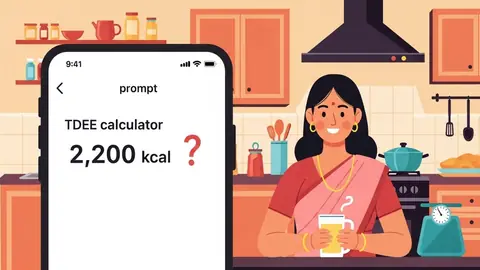 Why an online TDEE calculator is only a guess
A TDEE calculator gives you a clean number, but it is built on two guesses about your body. Two weeks of honest logging in Burnie turns that guess into your real number.
Why an online TDEE calculator is only a guess
A TDEE calculator gives you a clean number, but it is built on two guesses about your body. Two weeks of honest logging in Burnie turns that guess into your real number.
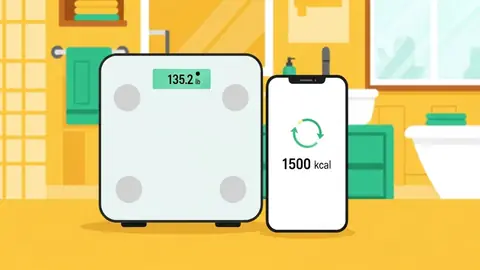 When to recalculate your TDEE after losing weight
As you lose weight, your smaller body burns fewer calories, so your old daily target quietly stops working. Re-check your TDEE every 4 to 5 kilos you lose so the maths stays honest and the scale keeps moving.
When to recalculate your TDEE after losing weight
As you lose weight, your smaller body burns fewer calories, so your old daily target quietly stops working. Re-check your TDEE every 4 to 5 kilos you lose so the maths stays honest and the scale keeps moving.
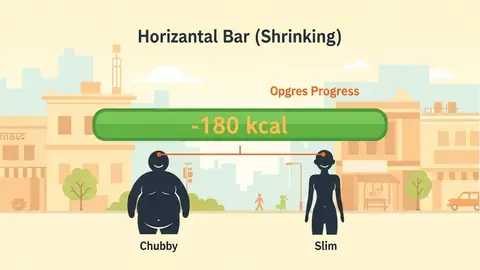 Why your deficit keeps shrinking as you lose weight
You were losing well, then the scale stuck. Your plan is not broken. A smaller body burns fewer calories, so your same food now makes a smaller gap.
Why your deficit keeps shrinking as you lose weight
You were losing well, then the scale stuck. Your plan is not broken. A smaller body burns fewer calories, so your same food now makes a smaller gap.