Burnie Academy
1255 short, honest guides to Indian food and weight loss. No fake precision — every calorie figure traces to a named source.
Read. Ask. Save.
See the app guide for asking about articles, liking useful reads and saving them for later.
Read every article for free
Register with your mobile number and OTP. Use the same number in the Burnie app to keep your profile, likes and favourites together.
 Why your daily burn changes on the same routine
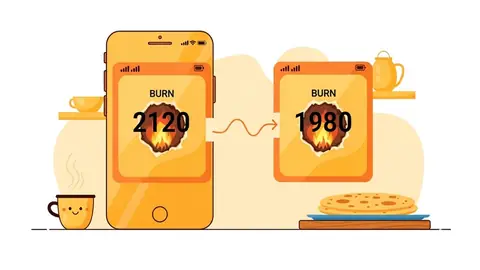
Your body never burns the exact same calories two days running, even on a fixed routine. NEAT, digestion and sleep make the number wobble, so read the weekly average in Burnie, not one lonely day.
Why your daily burn changes on the same routine
Your body never burns the exact same calories two days running, even on a fixed routine. NEAT, digestion and sleep make the number wobble, so read the weekly average in Burnie, not one lonely day.
 How many calories do 1,000 steps really burn?
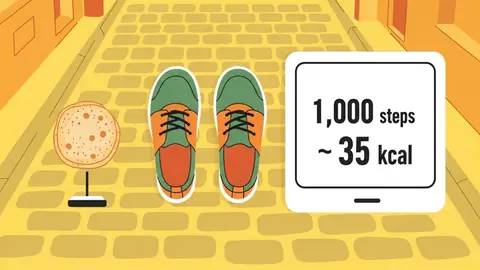
One thousand steps burn about 30 to 40 kcal for a typical adult. That is small, less than a third of one roti. But stack ten of these blocks and the maths starts to move your daily deficit.
How many calories do 1,000 steps really burn?
One thousand steps burn about 30 to 40 kcal for a typical adult. That is small, less than a third of one roti. But stack ten of these blocks and the maths starts to move your daily deficit.
 How to set your calorie deficit when your thyroid is slow
A slow thyroid lowers your daily burn a little, but the same maths still moves the scale. Here is how to set the deficit, why the result is slower, and why your doctor owns the dose while you own the food log.
How to set your calorie deficit when your thyroid is slow
A slow thyroid lowers your daily burn a little, but the same maths still moves the scale. Here is how to set the deficit, why the result is slower, and why your doctor owns the dose while you own the food log.
 Why a small body cannot copy a big man's deficit
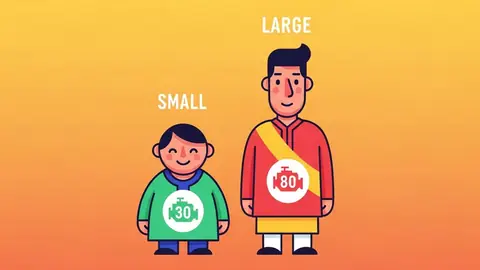
Your tall friend burns more calories than you do, even when you both sit still. So the big food cut that feels easy for him can push a small body below the safe calorie floor.
Why a small body cannot copy a big man's deficit
Your tall friend burns more calories than you do, even when you both sit still. So the big food cut that feels easy for him can push a small body below the safe calorie floor.
 How your workout changes today's calorie target
A workout makes Burnie add active calories to today's maths, so your 'Remaining' number jumps up. The honest move is to eat back only about half of it, or nothing at all. Here is why, with the real numbers.
How your workout changes today's calorie target
A workout makes Burnie add active calories to today's maths, so your 'Remaining' number jumps up. The honest move is to eat back only about half of it, or nothing at all. Here is why, with the real numbers.
 How many calories you burn just staying alive
Your body burns calories even when you sit perfectly still. This rest burn is the biggest slice of your whole day, bigger than any walk or workout. It is the solid floor your Burnie deficit is built on.
How many calories you burn just staying alive
Your body burns calories even when you sit perfectly still. This rest burn is the biggest slice of your whole day, bigger than any walk or workout. It is the solid floor your Burnie deficit is built on.
 How much of your deficit should come from exercise?
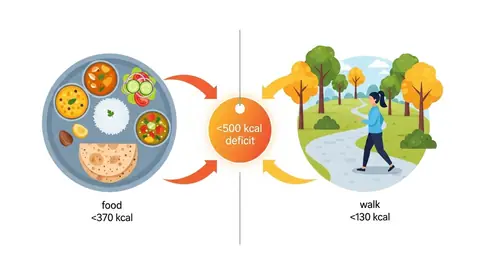
You picked a daily calorie target in Burnie. Now the real question is how to split it between food and exercise. Food cuts carry most of the deficit, and exercise adds a smaller, honest slice. Here is the maths and how to set your own split.
How much of your deficit should come from exercise?
You picked a daily calorie target in Burnie. Now the real question is how to split it between food and exercise. Food cuts carry most of the deficit, and exercise adds a smaller, honest slice. Here is the maths and how to set your own split.
 How many calories 1 kg of muscle really burns at rest
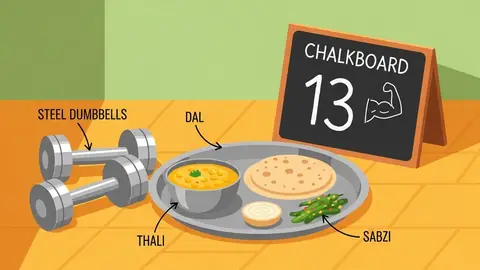
Muscle does burn more than fat at rest, but only about 13 kcal per kg per day. That honest number shows why lifting is great for strength and shape, but your food deficit still does the fat-loss work.
How many calories 1 kg of muscle really burns at rest
Muscle does burn more than fat at rest, but only about 13 kcal per kg per day. That honest number shows why lifting is great for strength and shape, but your food deficit still does the fat-loss work.
 How to work out your TDEE by hand in two minutes
TDEE is the calories your body burns in a whole day. You can work out your own number on paper in two minutes with one trusted rule, then check it against Burnie.
How to work out your TDEE by hand in two minutes
TDEE is the calories your body burns in a whole day. You can work out your own number on paper in two minutes with one trusted rule, then check it against Burnie.
 How to express your deficit as a percentage of TDEE
A flat calorie number hides how hard the cut feels. The same 500 kcal is a big slice for a small body and a small slice for a big one. Here is how to turn your deficit into a percentage of what you burn, so the cut fits your own body.
How to express your deficit as a percentage of TDEE
A flat calorie number hides how hard the cut feels. The same 500 kcal is a big slice for a small body and a small slice for a big one. Here is how to turn your deficit into a percentage of what you burn, so the cut fits your own body.
 How to find your true maintenance calories in 14 days
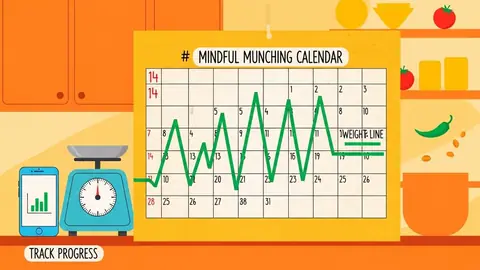
Online calorie formulas only guess your number. The true way is a 14-day test: eat your normal food, weigh daily, and let the weekly average tell you the calories that hold your weight flat.
How to find your true maintenance calories in 14 days
Online calorie formulas only guess your number. The true way is a 14-day test: eat your normal food, weigh daily, and let the weekly average tell you the calories that hold your weight flat.
 How to plan a one-week diet break and keep your progress
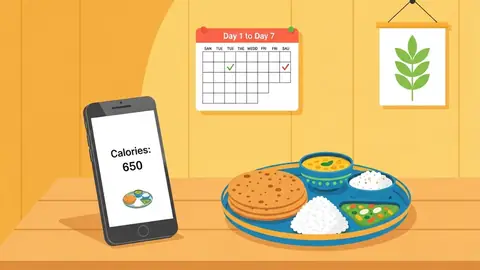
A diet break means eating at maintenance for 7 to 14 days. It rests your hunger and helps you stick with your cut, and it does not reset your metabolism. Keep logging in Burnie, eat at maintenance, then go back to your deficit.
How to plan a one-week diet break and keep your progress
A diet break means eating at maintenance for 7 to 14 days. It rests your hunger and helps you stick with your cut, and it does not reset your metabolism. Keep logging in Burnie, eat at maintenance, then go back to your deficit.
 How to track your deficit with just a notebook
You do not need an app to do the maths of weight loss. Four columns in a cheap notebook capture your food, your burn, and your daily deficit, and the pen helps the numbers stick in your head.
How to track your deficit with just a notebook
You do not need an app to do the maths of weight loss. Four columns in a cheap notebook capture your food, your burn, and your daily deficit, and the pen helps the numbers stick in your head.
 The calorie floor you should never drop below
There is a lowest safe number of calories to eat each day. Go below it and your body starts to break in ways you cannot see on the scale.
The calorie floor you should never drop below
There is a lowest safe number of calories to eat each day. Go below it and your body starts to break in ways you cannot see on the scale.
 The right calorie deficit when you sit at a desk all day
A desk job keeps your daily calorie burn small, so your cut must be small too. A safe 500-750 kcal deficit works well, but a savage 1,000 cut drops you below the food your body needs.
The right calorie deficit when you sit at a desk all day
A desk job keeps your daily calorie burn small, so your cut must be small too. A safe 500-750 kcal deficit works well, but a savage 1,000 cut drops you below the food your body needs.
 How big a deficit is safe when you have 20 kg to lose
When you have a lot to lose, you burn more energy each day, so you can run a bigger deficit than a small person. But there is still a ceiling, and crossing it brings gallstones and muscle loss.
How big a deficit is safe when you have 20 kg to lose
When you have a lot to lose, you burn more energy each day, so you can run a bigger deficit than a small person. But there is still a ceiling, and crossing it brings gallstones and muscle loss.
 The clean-plate club — why finishing everything quietly costs you
That old 'finish your plate' rule from childhood still whispers at every meal, and your Burnie log quietly shows the extra rotis it adds. You can leave food on the plate — your body maths beats the food-waste guilt every single day.
The clean-plate club — why finishing everything quietly costs you
That old 'finish your plate' rule from childhood still whispers at every meal, and your Burnie log quietly shows the extra rotis it adds. You can leave food on the plate — your body maths beats the food-waste guilt every single day.
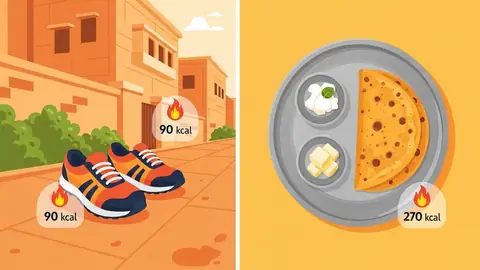 The 'I earned it' meal — why eating back your burn stalls you
That post-workout plate often eats back your whole burn, and your watch overstates the calories you burned. The honest maths shows why the walk is your health, not currency for a paratha.
The 'I earned it' meal — why eating back your burn stalls you
That post-workout plate often eats back your whole burn, and your watch overstates the calories you burned. The honest maths shows why the walk is your health, not currency for a paratha.
 Free food adds up — prasad, samples, and the office treat tin
Free food feels like it costs nothing, but your body cannot read a price tag. Prasad, shop samples, and the office biscuit tin quietly leak real calories into a day your log never sees.
Free food adds up — prasad, samples, and the office treat tin
Free food feels like it costs nothing, but your body cannot read a price tag. Prasad, shop samples, and the office biscuit tin quietly leak real calories into a day your log never sees.
 When love keeps refilling your plate — logging the generous host
An Indian host's ladle moves faster than your 'no, thank you'. Two small moves — log the refill in Burnie before it lands, and wait 20 minutes for fullness to arrive — let you keep the peace without eating three extra rotis' worth of love.
When love keeps refilling your plate — logging the generous host
An Indian host's ladle moves faster than your 'no, thank you'. Two small moves — log the refill in Burnie before it lands, and wait 20 minutes for fullness to arrive — let you keep the peace without eating three extra rotis' worth of love.
 The 'last supper' before a diet — the binge that sabotages Monday
The 'last supper' binge the night before a diet loads extra calories, water weight and guilt into day one before you even start. Skip the farewell feast — your fresh start is the next meal on your plate, not Monday.
The 'last supper' before a diet — the binge that sabotages Monday
The 'last supper' binge the night before a diet loads extra calories, water weight and guilt into day one before you even start. Skip the farewell feast — your fresh start is the next meal on your plate, not Monday.
 Restaurant menu words that secretly mean extra oil
Soft words like malai, crispy, buttery and shahi on a menu are quiet signals for spoons of oil, butter and cream. Learn what each word really hides, and you can read a menu with Burnie before the food even arrives.
Restaurant menu words that secretly mean extra oil
Soft words like malai, crispy, buttery and shahi on a menu are quiet signals for spoons of oil, butter and cream. Learn what each word really hides, and you can read a menu with Burnie before the food even arrives.
 The overnight whoosh — when the scale drops 2 kilos for no reason
After weeks of a stuck scale, the morning suddenly shows 1 to 2 kg gone. That joyful drop is mostly water finally leaving — the real fat was lost slowly during the sticky weeks before. Here is what is happening inside, and how to read the moment in Burnie.
The overnight whoosh — when the scale drops 2 kilos for no reason
After weeks of a stuck scale, the morning suddenly shows 1 to 2 kg gone. That joyful drop is mostly water finally leaving — the real fat was lost slowly during the sticky weeks before. Here is what is happening inside, and how to read the moment in Burnie.
 Your period and the scale — the water weight that is not fat
Your period can push the scale up by 1 to 2 kilos of water for a few days each month. It is not fat, and it leaves when the bleeding ends. Track the trend in Burnie, not the up-week, and talk to your doctor if the jumps feel too big.
Your period and the scale — the water weight that is not fat
Your period can push the scale up by 1 to 2 kilos of water for a few days each month. It is not fat, and it leaves when the bleeding ends. Track the trend in Burnie, not the up-week, and talk to your doctor if the jumps feel too big.
 The sick week — why the scale lies when you have a cold or fever
When you fall sick the scale often drops fast, then climbs back when you recover. Most of that dip is water and missed food, not fat — so do not celebrate it, and do not panic at the rebound.
The sick week — why the scale lies when you have a cold or fever
When you fall sick the scale often drops fast, then climbs back when you recover. Most of that dip is water and missed food, not fat — so do not celebrate it, and do not panic at the rebound.
 Why you weigh more after the gym (and it is not muscle)
You finish a hard workout, step on the scale, and the number has gone UP by half a kilo or more. It feels scary and unfair, but it cannot be fat or new muscle. It is water you drank, water pulled in by refilling sugar stores, and water sent to fix sore muscles.
Why you weigh more after the gym (and it is not muscle)
You finish a hard workout, step on the scale, and the number has gone UP by half a kilo or more. It feels scary and unfair, but it cannot be fat or new muscle. It is water you drank, water pulled in by refilling sugar stores, and water sent to fix sore muscles.
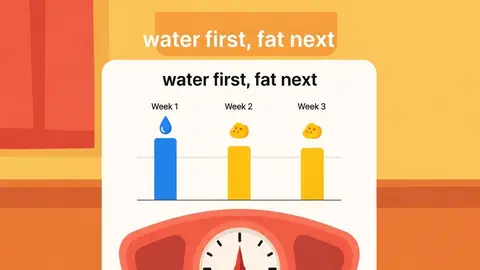 The first week drop is mostly water — what your numbers do next
That big week-one drop on Burnie feels like magic, but most of it is water and stored sugar, not fat. Weeks 2 and 3 slow down to the real fat rate, and that slowdown is the maths working, not failing.
The first week drop is mostly water — what your numbers do next
That big week-one drop on Burnie feels like magic, but most of it is water and stored sugar, not fat. Weeks 2 and 3 slow down to the real fat rate, and that slowdown is the maths working, not failing.
 The friend who eats more and weighs less — a different body's maths
You watch a thin friend polish off a third roti and feel cheated. Their body's maths is not your body's maths. Different height, muscle, NEAT, genes, and history make their plate a bad ruler for yours.
The friend who eats more and weighs less — a different body's maths
You watch a thin friend polish off a third roti and feel cheated. Their body's maths is not your body's maths. Different height, muscle, NEAT, genes, and history make their plate a bad ruler for yours.
 Home vs restaurant — same dish, different maths
A dal at home and a dal at a restaurant are two different meals. The oil and cream change the calories, so log the real one, not just the dish name.
Home vs restaurant — same dish, different maths
A dal at home and a dal at a restaurant are two different meals. The oil and cream change the calories, so log the real one, not just the dish name.
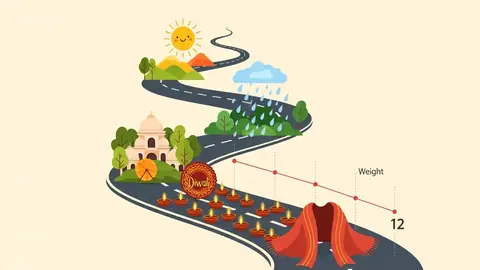 One year of logs — what the long-term data finally teaches you
When you log for a whole year, you stop fighting each bad week and start seeing the real shape of your journey — festivals, winters, travel, and the slow trend that quietly wins. The goal stops being a number on the scale and becomes a life that holds.
One year of logs — what the long-term data finally teaches you
When you log for a whole year, you stop fighting each bad week and start seeing the real shape of your journey — festivals, winters, travel, and the slow trend that quietly wins. The goal stops being a number on the scale and becomes a life that holds.