Burnie Academy
1255 short, honest guides to Indian food and weight loss. No fake precision — every calorie figure traces to a named source.
Read. Ask. Save.
See the app guide for asking about articles, liking useful reads and saving them for later.
Read every article for free
Register with your mobile number and OTP. Use the same number in the Burnie app to keep your profile, likes and favourites together.
 Stopping your GLP-1: taper or stop all at once?
There is no single official taper schedule on the GLP-1 medicine labels. Stopping is a doctor-led choice, and the honest answer is it depends on you. Build a food-and-movement plan before you come off.
Stopping your GLP-1: taper or stop all at once?
There is no single official taper schedule on the GLP-1 medicine labels. Stopping is a doctor-led choice, and the honest answer is it depends on you. Build a food-and-movement plan before you come off.
 How long do you stay on a GLP-1 medicine?
There is no fixed course length for a GLP-1 medicine. Most experts treat obesity as a long-term (often lifelong) condition, but the exact duration is a decision you revisit with your doctor.
How long do you stay on a GLP-1 medicine?
There is no fixed course length for a GLP-1 medicine. Most experts treat obesity as a long-term (often lifelong) condition, but the exact duration is a decision you revisit with your doctor.
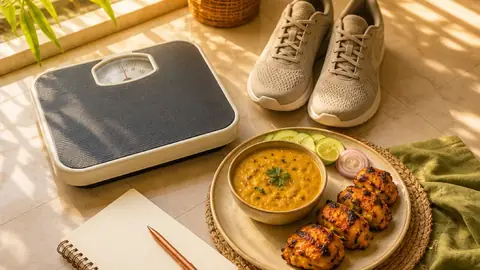 Keeping the weight off after your GLP-1
Stopping a GLP-1 makes regain more likely because appetite hormones rebound. Build your maintenance plan BEFORE you stop, with daily tracking, protein, movement, and a doctor restart deal.
Keeping the weight off after your GLP-1
Stopping a GLP-1 makes regain more likely because appetite hormones rebound. Build your maintenance plan BEFORE you stop, with daily tracking, protein, movement, and a doctor restart deal.
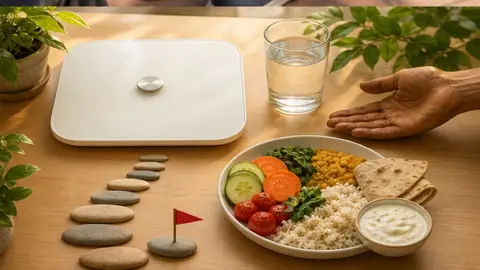 You reached your goal weight on a GLP-1 — now what?
Hitting your goal weight is a big win, but the maintenance phase is where the real work begins. Here is a doctor-led plan to hand off from weight loss to keeping it off.
You reached your goal weight on a GLP-1 — now what?
Hitting your goal weight is a big win, but the maintenance phase is where the real work begins. Here is a doctor-led plan to hand off from weight loss to keeping it off.
 Drinking alcohol while on a GLP-1
A GLP-1 medicine does not ban alcohol, but drinks can worsen nausea, add empty calories, and drop blood sugar if you also take insulin. Some early research hints GLP-1s may quiet alcohol cravings, but this is not a treatment yet.
Drinking alcohol while on a GLP-1
A GLP-1 medicine does not ban alcohol, but drinks can worsen nausea, add empty calories, and drop blood sugar if you also take insulin. Some early research hints GLP-1s may quiet alcohol cravings, but this is not a treatment yet.
 GLP-1 shots and antidepressants: what to know
Many people take a GLP-1 weight-loss medicine and an antidepressant at the same time. They can work together, but you should know three simple things first.
GLP-1 shots and antidepressants: what to know
Many people take a GLP-1 weight-loss medicine and an antidepressant at the same time. They can work together, but you should know three simple things first.
 GLP-1 and blood pressure medicines: what to watch
GLP-1 shots can lower your blood pressure a little as you lose weight. If you already take BP medicines, your dose may slowly become too much, so tell your doctor.
GLP-1 and blood pressure medicines: what to watch
GLP-1 shots can lower your blood pressure a little as you lose weight. If you already take BP medicines, your dose may slowly become too much, so tell your doctor.
 Coffee and GLP-1: Safe to Combine?
You can usually drink coffee while on a GLP-1 medicine. Just have it with food, sip water, and watch for a racing heart.
Coffee and GLP-1: Safe to Combine?
You can usually drink coffee while on a GLP-1 medicine. Just have it with food, sip water, and watch for a racing heart.
 GLP-1 and birth control pills: do they interact?
GLP-1 weight-loss shots slow your stomach, so people worry their daily birth control pill will not absorb. The good news: most labels say the pill still works fine, with one important catch for tirzepatide.
GLP-1 and birth control pills: do they interact?
GLP-1 weight-loss shots slow your stomach, so people worry their daily birth control pill will not absorb. The good news: most labels say the pill still works fine, with one important catch for tirzepatide.
 GLP-1 with other diabetes pills: metformin, SGLT2, DPP-4
GLP-1 shots work well with metformin and SGLT2 pills, but not with DPP-4 pills. Here is what each pair does, and what to ask your doctor.
GLP-1 with other diabetes pills: metformin, SGLT2, DPP-4
GLP-1 shots work well with metformin and SGLT2 pills, but not with DPP-4 pills. Here is what each pair does, and what to ask your doctor.
 Taking GLP-1 with your thyroid medicine (levothyroxine)
GLP-1 medicines can change how your body absorbs levothyroxine, your thyroid pill. The two thyroid worries people mix up are actually different things, and a few simple timing steps help.
Taking GLP-1 with your thyroid medicine (levothyroxine)
GLP-1 medicines can change how your body absorbs levothyroxine, your thyroid pill. The two thyroid worries people mix up are actually different things, and a few simple timing steps help.
 GLP-1 and warfarin: INR changes to watch
If you take warfarin (a blood thinner) and start a GLP-1 medicine, your INR blood test may need closer checks. The good news: a few simple habits keep you safe.
GLP-1 and warfarin: INR changes to watch
If you take warfarin (a blood thinner) and start a GLP-1 medicine, your INR blood test may need closer checks. The good news: a few simple habits keep you safe.
 GLP-1 with insulin: the low-blood-sugar risk
GLP-1 medicines alone rarely cause low blood sugar. But add insulin, and the danger goes up. Your doctor can lower the insulin dose to keep you safe.
GLP-1 with insulin: the low-blood-sugar risk
GLP-1 medicines alone rarely cause low blood sugar. But add insulin, and the danger goes up. Your doctor can lower the insulin dose to keep you safe.
 GLP-1 with sulfonylureas: watch for low sugar
Taking a GLP-1 shot with a sulfonylurea pill can raise your risk of low blood sugar. Your doctor may lower the sulfonylurea dose to keep you safe.
GLP-1 with sulfonylureas: watch for low sugar
Taking a GLP-1 shot with a sulfonylurea pill can raise your risk of low blood sugar. Your doctor may lower the sulfonylurea dose to keep you safe.
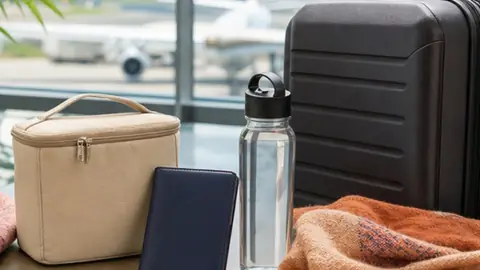 Flying with your GLP-1 pen: rules that actually matter
Your GLP-1 pen can fly with you in your cabin bag, never in checked luggage. Declare it at security, keep it cool with a gel pack, and stay on your weekly day.
Flying with your GLP-1 pen: rules that actually matter
Your GLP-1 pen can fly with you in your cabin bag, never in checked luggage. Declare it at security, keep it cool with a gel pack, and stay on your weekly day.
 Surviving Diwali and weddings on a GLP-1
Festivals in India mean mithai, biryani, and big buffets. Your GLP-1 medicine can help you eat smart and avoid nausea, if you take small portions and never skip your dose without your doctor.
Surviving Diwali and weddings on a GLP-1
Festivals in India mean mithai, biryani, and big buffets. Your GLP-1 medicine can help you eat smart and avoid nausea, if you take small portions and never skip your dose without your doctor.
 Why you must rotate your GLP-1 injection spots
Sticking your GLP-1 pen in the same spot each week can cause fatty lumps under your skin. Rotate sites every dose so the medicine absorbs evenly and your skin stays smooth.
Why you must rotate your GLP-1 injection spots
Sticking your GLP-1 pen in the same spot each week can cause fatty lumps under your skin. Rotate sites every dose so the medicine absorbs evenly and your skin stays smooth.
 Missed a GLP-1 dose? Here is what to do
Missed a GLP-1 dose? Do not panic, and never take two to catch up. Each drug has its own missed-dose rule printed in its FDA label.
Missed a GLP-1 dose? Here is what to do
Missed a GLP-1 dose? Do not panic, and never take two to catch up. Each drug has its own missed-dose rule printed in its FDA label.
 Should you stop your GLP-1 before surgery?
GLP-1 medicines slow your stomach, so food can stay inside longer and raise a risk during anesthesia. Your surgery team tells you when to hold your pen — do not stop it on your own.
Should you stop your GLP-1 before surgery?
GLP-1 medicines slow your stomach, so food can stay inside longer and raise a risk during anesthesia. Your surgery team tells you when to hold your pen — do not stop it on your own.
 Can you fast in Ramadan while on a GLP-1?
A GLP-1 medicine alone has a low risk of low blood sugar during Ramadan, so fasting is often possible. The real worries are dehydration and a too-big iftar meal, so plan with your doctor first.
Can you fast in Ramadan while on a GLP-1?
A GLP-1 medicine alone has a low risk of low blood sugar during Ramadan, so fasting is often possible. The real worries are dehydration and a too-big iftar meal, so plan with your doctor first.
 How to inject your GLP-1 pen the right way
Your GLP-1 weight-loss pen goes under the skin, not into a muscle. Learn the three safe spots, the simple pen steps, and why your doctor should show you first.
How to inject your GLP-1 pen the right way
Your GLP-1 weight-loss pen goes under the skin, not into a muscle. Learn the three safe spots, the simple pen steps, and why your doctor should show you first.
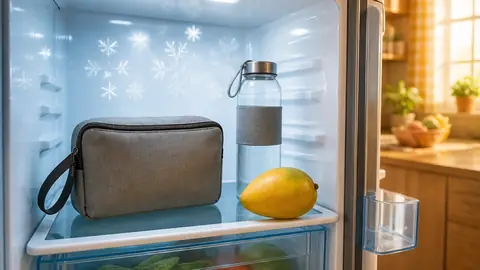 Storing your GLP-1 pen in Indian summer heat
GLP-1 pens must stay cool, but Indian summer heat can rise above their safe limit. Here is what each pen's label says, and how to keep your medicine safe in hot weather.
Storing your GLP-1 pen in Indian summer heat
GLP-1 pens must stay cool, but Indian summer heat can rise above their safe limit. Here is what each pen's label says, and how to keep your medicine safe in hot weather.
 Switching from one GLP-1 to another: the safe way
Switching your weight-loss injection to a new GLP-1 drug is your doctor's choice, not a do-it-yourself swap. Each new drug has its own start-low, go-slow dose plan, so you restart at the new drug's small starting dose and climb up again to keep your stomach calm.
Switching from one GLP-1 to another: the safe way
Switching your weight-loss injection to a new GLP-1 drug is your doctor's choice, not a do-it-yourself swap. Each new drug has its own start-low, go-slow dose plan, so you restart at the new drug's small starting dose and climb up again to keep your stomach calm.
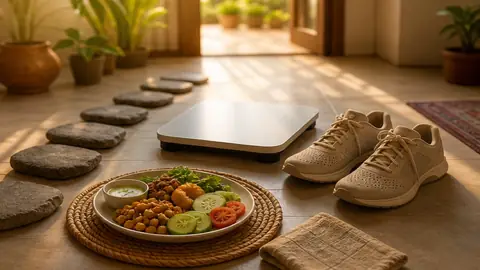 Your GLP-1 weight loss stopped: why, and what helps
A weight-loss plateau on your GLP-1 jab is normal and expected, not a sign the drug stopped working. Your body fights back as you lose weight, so the same effort brings slower loss. Here is what truly helps.
Your GLP-1 weight loss stopped: why, and what helps
A weight-loss plateau on your GLP-1 jab is normal and expected, not a sign the drug stopped working. Your body fights back as you lose weight, so the same effort brings slower loss. Here is what truly helps.
 GLP-1 medicines for teens with obesity: the honest picture
GLP-1 shots like Wegovy and Saxenda are now approved for teens aged 12 and older with obesity, and the STEP TEENS trial is encouraging. But long-term data in still-growing bodies is limited, and family-based lifestyle care stays the foundation. Here is what is approved, what the trials show, and the honest limits.
GLP-1 medicines for teens with obesity: the honest picture
GLP-1 shots like Wegovy and Saxenda are now approved for teens aged 12 and older with obesity, and the STEP TEENS trial is encouraging. But long-term data in still-growing bodies is limited, and family-based lifestyle care stays the foundation. Here is what is approved, what the trials show, and the honest limits.
 GLP-1 medicines after bariatric surgery for weight regain
Weight regain after bariatric surgery is common, and it can feel discouraging after such a big step. A newer option doctors sometimes use is GLP-1 medicines like semaglutide or tirzepatide, given to help with that regained weight. The evidence is early but real: one randomised trial found semaglutide led to about 18% weight loss in people with a poor response after surgery, and several studies back this up. But these medicines are not a substitute for the lifestyle base your surgery rests on, and your altered stomach anatomy raises real safety points like dumping syndrome, low blood sugar after gastric bypass, hydration, and vitamin needs. Your bariatric team and your doctor decide if this fits you. This is information, not a prescription.
GLP-1 medicines after bariatric surgery for weight regain
Weight regain after bariatric surgery is common, and it can feel discouraging after such a big step. A newer option doctors sometimes use is GLP-1 medicines like semaglutide or tirzepatide, given to help with that regained weight. The evidence is early but real: one randomised trial found semaglutide led to about 18% weight loss in people with a poor response after surgery, and several studies back this up. But these medicines are not a substitute for the lifestyle base your surgery rests on, and your altered stomach anatomy raises real safety points like dumping syndrome, low blood sugar after gastric bypass, hydration, and vitamin needs. Your bariatric team and your doctor decide if this fits you. This is information, not a prescription.
 GLP-1 Medicines and Binge Eating Disorder: The Honest Facts
Binge eating disorder (BED) is a real eating disorder, not a willpower problem. The FDA-approved medicine for BED is lisdexamfetamine (Vyvanse), which is not a GLP-1. GLP-1 medicines like semaglutide and liraglutide are being studied for BED because they may reduce appetite and reward-driven eating, but the evidence is small and emerging, and they are not approved for BED. Evidence-based therapy such as cognitive behavioral therapy is the main first-line help. A GLP-1 should not be used for binge eating without eating-disorder screening and a specialist, because misuse can cause serious harm.
GLP-1 Medicines and Binge Eating Disorder: The Honest Facts
Binge eating disorder (BED) is a real eating disorder, not a willpower problem. The FDA-approved medicine for BED is lisdexamfetamine (Vyvanse), which is not a GLP-1. GLP-1 medicines like semaglutide and liraglutide are being studied for BED because they may reduce appetite and reward-driven eating, but the evidence is small and emerging, and they are not approved for BED. Evidence-based therapy such as cognitive behavioral therapy is the main first-line help. A GLP-1 should not be used for binge eating without eating-disorder screening and a specialist, because misuse can cause serious harm.
 GLP-1 medicines and breastfeeding: the honest, careful answer
GLP-1 weight-loss medicines like semaglutide and liraglutide are generally not recommended while you are breastfeeding. The FDA labels say there are no data on these drugs in human milk, and rodent studies show the drugs do pass into animal milk. One small study of eight mothers found that injectable semaglutide was not detectable in milk, but the human data are still very limited. The Wegovy tablet form is specifically not recommended during nursing because of an extra ingredient called SNAC. The good news is that breastfeeding itself helps with postpartum weight loss and gives your baby big health benefits. This guide explains what the FDA labels, the LactMed database, and the World Health Organization really say, the postpartum weight-loss question, and the timing of when you might restart. Your doctor and your baby's pediatrician decide your care.
GLP-1 medicines and breastfeeding: the honest, careful answer
GLP-1 weight-loss medicines like semaglutide and liraglutide are generally not recommended while you are breastfeeding. The FDA labels say there are no data on these drugs in human milk, and rodent studies show the drugs do pass into animal milk. One small study of eight mothers found that injectable semaglutide was not detectable in milk, but the human data are still very limited. The Wegovy tablet form is specifically not recommended during nursing because of an extra ingredient called SNAC. The good news is that breastfeeding itself helps with postpartum weight loss and gives your baby big health benefits. This guide explains what the FDA labels, the LactMed database, and the World Health Organization really say, the postpartum weight-loss question, and the timing of when you might restart. Your doctor and your baby's pediatrician decide your care.
 GLP-1 medicines in the menopause transition: honest help and risks
Around the menopause transition, estrogen falls and the body shifts more fat to the belly, insulin resistance rises, and bone density starts to drop. GLP-1 medicines like semaglutide are not hormone therapy and do not treat menopause itself, but the small evidence so far in menopausal and postmenopausal women shows they help with weight loss and central belly fat, and may help cardiometabolic risk. Honest gaps remain: menopause-specific data on bone density and muscle preservation are still limited, so protein, strength work, and bone care matter even more while on these medicines. Decisions on dose, hormone therapy, and bone treatment belong with your doctor.
GLP-1 medicines in the menopause transition: honest help and risks
Around the menopause transition, estrogen falls and the body shifts more fat to the belly, insulin resistance rises, and bone density starts to drop. GLP-1 medicines like semaglutide are not hormone therapy and do not treat menopause itself, but the small evidence so far in menopausal and postmenopausal women shows they help with weight loss and central belly fat, and may help cardiometabolic risk. Honest gaps remain: menopause-specific data on bone density and muscle preservation are still limited, so protein, strength work, and bone care matter even more while on these medicines. Decisions on dose, hormone therapy, and bone treatment belong with your doctor.
 GLP-1 for normal BMI: the honest ethics and safety picture
GLP-1 medicines like semaglutide were built for medical obesity and type-2 diabetes, not for dropping a few kilos before a wedding. The official rule is clear: a doctor may prescribe for weight loss only if your BMI is 30 or more, or 27 or more with a weight-related condition like diabetes or high blood pressure. Indian and South-Asian cut-points are lower, around 23 for overweight and 25 for obesity, but they are still medical criteria, not a cosmetic pass. This guide gives the honest picture on who really qualifies, why cosmetic and low-BMI use is not recommended, the real risks in lean bodies, the shortage and access ethics, and what to do instead. Always talk to your doctor. This article does not tell you to take any medicine.
GLP-1 for normal BMI: the honest ethics and safety picture
GLP-1 medicines like semaglutide were built for medical obesity and type-2 diabetes, not for dropping a few kilos before a wedding. The official rule is clear: a doctor may prescribe for weight loss only if your BMI is 30 or more, or 27 or more with a weight-related condition like diabetes or high blood pressure. Indian and South-Asian cut-points are lower, around 23 for overweight and 25 for obesity, but they are still medical criteria, not a cosmetic pass. This guide gives the honest picture on who really qualifies, why cosmetic and low-BMI use is not recommended, the real risks in lean bodies, the shortage and access ethics, and what to do instead. Always talk to your doctor. This article does not tell you to take any medicine.