Burnie Academy
1255 short, honest guides to Indian food and weight loss. No fake precision — every calorie figure traces to a named source.
Read. Ask. Save.
See the app guide for asking about articles, liking useful reads and saving them for later.
Read every article for free
Register with your mobile number and OTP. Use the same number in the Burnie app to keep your profile, likes and favourites together.
 Cutting all carbs backfires - keep roti, count calories
Cutting out every carb feels strict, but it drains your fuel and then rebounds. The number that drives weight loss is your calorie deficit, not your carb count.
Cutting all carbs backfires - keep roti, count calories
Cutting out every carb feels strict, but it drains your fuel and then rebounds. The number that drives weight loss is your calorie deficit, not your carb count.
 Cutting all fat? Why a near-zero-fat diet backfires
Cutting every drop of ghee and oil sounds healthy, but it leaves you hungry and robs your vitamins. Keep a little fat, count its calories, and mind the deficit, not the fat.
Cutting all fat? Why a near-zero-fat diet backfires
Cutting every drop of ghee and oil sounds healthy, but it leaves you hungry and robs your vitamins. Keep a little fat, count its calories, and mind the deficit, not the fat.
 Diet namkeen trap: roasted does not mean low calorie
A pack that says 'diet' or 'roasted' can still hold over 500 calories per 100 g, almost the same as fried namkeen. The bigger trap is the health halo: you eat three times the serving because it sounds healthy, so log the real calories and let the deficit decide.
Diet namkeen trap: roasted does not mean low calorie
A pack that says 'diet' or 'roasted' can still hold over 500 calories per 100 g, almost the same as fried namkeen. The bigger trap is the health halo: you eat three times the serving because it sounds healthy, so log the real calories and let the deficit decide.
 Food as a reward: the math that quietly breaks your deficit
Telling yourself 'I earned this samosa' wires every win to a calorie hit, and the treat often beats the calories you burned. The Burnie way is not to ban the sweet. It is to log it into your deficit so the number stays honest.
Food as a reward: the math that quietly breaks your deficit
Telling yourself 'I earned this samosa' wires every win to a calorie hit, and the treat often beats the calories you burned. The Burnie way is not to ban the sweet. It is to log it into your deficit so the number stays honest.
 Drink your calories? They quietly blow the deficit
Sweet chai, soda, lassi and juice do not fill you up, but they add hundreds of kcal to your day. Log every drink in Burnie before you sip it, see the deficit cost, and pick the lighter swap.
Drink your calories? They quietly blow the deficit
Sweet chai, soda, lassi and juice do not fill you up, but they add hundreds of kcal to your day. Log every drink in Burnie before you sip it, see the deficit cost, and pick the lighter swap.
 Skipping Meals Backfires — But Not How You Think
Skipping a meal does not slow your metabolism. It backfires because it makes you too hungry, breaks your log habit, and can trigger a what-the-hell eating urge later.
Skipping Meals Backfires — But Not How You Think
Skipping a meal does not slow your metabolism. It backfires because it makes you too hungry, breaks your log habit, and can trigger a what-the-hell eating urge later.
 Starvation Mode Is Mostly a Myth — Here's the Truth
Your body does slow down a little when you lose weight, but it never stops burning fat in a true deficit. Most scale stalls come from eating a bit more than you think, water shifts, or a smaller body needing fewer calories.
Starvation Mode Is Mostly a Myth — Here's the Truth
Your body does slow down a little when you lose weight, but it never stops burning fat in a true deficit. Most scale stalls come from eating a bit more than you think, water shifts, or a smaller body needing fewer calories.
 The scale is the wrong signal. Watch your deficit
The scale jumps 1-2 kg overnight from water, salt and stored carbs you don't control. The number you do control is your daily calorie deficit. Watch that instead, and weigh only for the trend.
The scale is the wrong signal. Watch your deficit
The scale jumps 1-2 kg overnight from water, salt and stored carbs you don't control. The number you do control is your daily calorie deficit. Watch that instead, and weigh only for the trend.
 7 Weight-Loss Mistakes That Break Your Deficit
Seven small habits sneak extra calories into your day or make you quit too soon. Burnie names each mistake and the simple fix that keeps your deficit working.
7 Weight-Loss Mistakes That Break Your Deficit
Seven small habits sneak extra calories into your day or make you quit too soon. Burnie names each mistake and the simple fix that keeps your deficit working.
 The numbers Burnie shows you before you eat
Before you eat, Burnie shows five small numbers — food so far, BMR, active calories, the AI meal estimate, and the deficit left. Each one is a plain hint that helps you decide how much to put on the plate. Here is what they mean and how to read them in 10 seconds.
The numbers Burnie shows you before you eat
Before you eat, Burnie shows five small numbers — food so far, BMR, active calories, the AI meal estimate, and the deficit left. Each one is a plain hint that helps you decide how much to put on the plate. Here is what they mean and how to read them in 10 seconds.
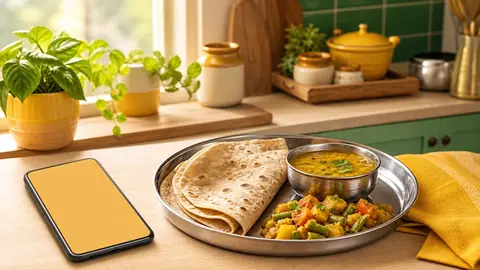 How to Log Your Meal BEFORE You Eat in Burnie
A simple 10-second habit: type what you are about to eat into Burnie, see the calorie total, then decide. Here is the exact step-by-step flow with a real meal example.
How to Log Your Meal BEFORE You Eat in Burnie
A simple 10-second habit: type what you are about to eat into Burnie, see the calorie total, then decide. Here is the exact step-by-step flow with a real meal example.
 Log your food BEFORE you eat, not after
Logging food before you eat puts the calorie number in front of you at the exact moment you can still choose. That tiny pause lets you eat less, skip, or pick something smaller, while after-eating logging is just a late audit.
Log your food BEFORE you eat, not after
Logging food before you eat puts the calorie number in front of you at the exact moment you can still choose. That tiny pause lets you eat less, skip, or pick something smaller, while after-eating logging is just a late audit.
 Log Before You Eat: Build the Habit That Sticks
Logging your meal before you eat it is the one habit that makes a calorie deficit stick. Here is how to build the log-then-eat loop so it becomes automatic.
Log Before You Eat: Build the Habit That Sticks
Logging your meal before you eat it is the one habit that makes a calorie deficit stick. Here is how to build the log-then-eat loop so it becomes automatic.
 Log Before You Eat or After? The Timing That Actually Works
Logging food before you eat is a decision tool — the calorie number lands while you can still choose. Logging after is just an audit, and audits get abandoned. Here is the head-to-head difference and why before wins.
Log Before You Eat or After? The Timing That Actually Works
Logging food before you eat is a decision tool — the calorie number lands while you can still choose. Logging after is just an audit, and audits get abandoned. Here is the head-to-head difference and why before wins.
 Chest Strap vs Optical HR: Which Sensor Is More Honest?
Two ways to read your heartbeat exist. One uses electrical signals, the other uses light. Here is what the science says about which is more accurate, and why it still only gives an indirect calorie guess. Burnie itself does not use heart rate at all.
Chest Strap vs Optical HR: Which Sensor Is More Honest?
Two ways to read your heartbeat exist. One uses electrical signals, the other uses light. Here is what the science says about which is more accurate, and why it still only gives an indirect calorie guess. Burnie itself does not use heart rate at all.
 How Your Heart Rate Becomes a Calorie Number
Your watch turns heart beats into calories using a chain of guesses: heart rate to oxygen to calories. It is an indirect estimate, not a real measurement, which is why Burnie does not use heart rate at all.
How Your Heart Rate Becomes a Calorie Number
Your watch turns heart beats into calories using a chain of guesses: heart rate to oxygen to calories. It is an indirect estimate, not a real measurement, which is why Burnie does not use heart rate at all.
 Heart Rate vs Phone Calories: Why Burnie Picks Phone
There are two common ways to guess calorie burn — one reads your heart rate from a strap or watch, the other counts steps from your phone. Both are estimates. Burnie picks the phone way on purpose: no extra device, free, and heart-rate calories are an unreliable proxy anyway.
Heart Rate vs Phone Calories: Why Burnie Picks Phone
There are two common ways to guess calorie burn — one reads your heart rate from a strap or watch, the other counts steps from your phone. Both are estimates. Burnie picks the phone way on purpose: no extra device, free, and heart-rate calories are an unreliable proxy anyway.
 Smartwatch Calorie Numbers Are Guesses, Not Measurements
Studies tested many smartwatches and found the calorie numbers are often wrong by 20 to 90 percent. Burnie does not use a smartwatch or heart rate; it uses your phone or a manual override instead.
Smartwatch Calorie Numbers Are Guesses, Not Measurements
Studies tested many smartwatches and found the calorie numbers are often wrong by 20 to 90 percent. Burnie does not use a smartwatch or heart rate; it uses your phone or a manual override instead.
 When heart-rate calorie counting misleads you
Fitness bands guess calories from your pulse, but that guess breaks down during weights, intervals, heat, stress, and some medicines. Burnie does not use heart rate at all — it uses your phone's active calories instead.
When heart-rate calorie counting misleads you
Fitness bands guess calories from your pulse, but that guess breaks down during weights, intervals, heat, stress, and some medicines. Burnie does not use heart rate at all — it uses your phone's active calories instead.
 BMR explained: the free calories your body burns at rest
BMR is the energy your body burns just to stay alive — heart, lungs, brain, kidneys — while you lie still. It is about 60 to 70 percent of everything you burn each day, and Burnie subtracts it as the big baseline in your deficit.
BMR explained: the free calories your body burns at rest
BMR is the energy your body burns just to stay alive — heart, lungs, brain, kidneys — while you lie still. It is about 60 to 70 percent of everything you burn each day, and Burnie subtracts it as the big baseline in your deficit.
 Your moving day burns calories — and Burnie sees it
The calories you burn walking to the metro or cooking are real, and your phone already counts them. Burnie turns that daily movement into a bigger deficit, with no gym needed.
Your moving day burns calories — and Burnie sees it
The calories you burn walking to the metro or cooking are real, and your phone already counts them. Burnie turns that daily movement into a bigger deficit, with no gym needed.
 Your Phone's Calorie Burn Number Is a Guess
Your phone counts steps well, but its active-calorie number is only a rough estimate from a formula. Burnie lets you fix that number with a manual override when you know better.
Your Phone's Calorie Burn Number Is a Guess
Your phone counts steps well, but its active-calorie number is only a rough estimate from a formula. Burnie lets you fix that number with a manual override when you know better.
 TDEE: the whole calories-out story (and how Burnie simplifies it)
TDEE is every calorie you burn in a day. It has three parts: BMR, food digestion, and movement. Burnie folds movement into one active-calories number and keeps the maths simple.
TDEE: the whole calories-out story (and how Burnie simplifies it)
TDEE is every calorie you burn in a day. It has three parts: BMR, food digestion, and movement. Burnie folds movement into one active-calories number and keeps the maths simple.
 Active calories — the movement slice in Burnie's maths
Active calories are the energy you burn from moving — walking, chores, exercise — on top of your BMR. Burnie adds this slice to your BMR to get the calories-out side of your daily deficit.
Active calories — the movement slice in Burnie's maths
Active calories are the energy you burn from moving — walking, chores, exercise — on top of your BMR. Burnie adds this slice to your BMR to get the calories-out side of your daily deficit.
 The 4-4-9 rule: how food calories are actually counted
Food calories come from simple per-gram numbers: protein 4, carb 4, fat 9. This is the Atwater system, made over 100 years ago and still used today. Burnie uses these same factors to guess your meal's calories from text.
The 4-4-9 rule: how food calories are actually counted
Food calories come from simple per-gram numbers: protein 4, carb 4, fat 9. This is the Atwater system, made over 100 years ago and still used today. Burnie uses these same factors to guess your meal's calories from text.
 Why a spoon of ghee beats a bowl of dal in calories
Fat gives 9 calories per gram, but protein and carbs give only 4. So a small spoon of ghee carries more calories than a big bowl of dal. Knowing this one number helps you eat more food for fewer calories.
Why a spoon of ghee beats a bowl of dal in calories
Fat gives 9 calories per gram, but protein and carbs give only 4. So a small spoon of ghee carries more calories than a big bowl of dal. Knowing this one number helps you eat more food for fewer calories.
 Two Weird Calorie Rules: Fibre and Alcohol
Fibre is not zero calories, and alcohol gives almost as many calories as fat. Learn the two odd calorie rules most people get wrong, the easy way.
Two Weird Calorie Rules: Fibre and Alcohol
Fibre is not zero calories, and alcohol gives almost as many calories as fat. Learn the two odd calorie rules most people get wrong, the easy way.
 How to read the calorie line on a food label
The calorie number on a pack looks simple, but it hides behind three tricks: per-100g vs per-serving, kJ vs kcal, and a serving size that is often smaller than you eat. Learn to read it right so the number you log is the number you actually ate.
How to read the calorie line on a food label
The calorie number on a pack looks simple, but it hides behind three tricks: per-100g vs per-serving, kJ vs kcal, and a serving size that is often smaller than you eat. Learn to read it right so the number you log is the number you actually ate.
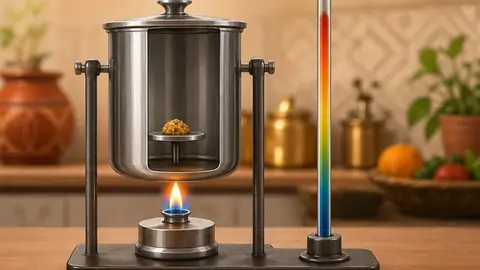 How Does a Food Label Get Its Calorie Number?
That calorie number on a food packet is not guessed. It comes from burning food in a lab, then fixing the number for what your body actually absorbs.
How Does a Food Label Get Its Calorie Number?
That calorie number on a food packet is not guessed. It comes from burning food in a lab, then fixing the number for what your body actually absorbs.
 The grazing mistake: bites you don't even count
The little bites, sips, and leftovers you eat between meals can add up to hundreds of calories a day that never reach your log. The fix is simple — log it before you eat it, so your daily deficit stays honest.
The grazing mistake: bites you don't even count
The little bites, sips, and leftovers you eat between meals can add up to hundreds of calories a day that never reach your log. The fix is simple — log it before you eat it, so your daily deficit stays honest.