Burnie Academy
1255 short, honest guides to Indian food and weight loss. No fake precision — every calorie figure traces to a named source.
Read. Ask. Save.
See the app guide for asking about articles, liking useful reads and saving them for later.
Read every article for free
Register with your mobile number and OTP. Use the same number in the Burnie app to keep your profile, likes and favourites together.
 Sambhar vada: why the little vada is the heavy part
A sambhar vada order of two vadas with a katori of sambhar is about 315 kcal, and most of the fat comes from the deep-fried vada, not the light dal soup. Swap to idli-sambhar or an appe-pan vada and the same bowl drops to roughly 185 kcal.
 Morning vs night weight - which is your real weight?
Your weight moves up and down all day as you eat, drink, sweat, and use the toilet. The morning number, after the toilet and before food or water, is the fairest one to compare week to week.
Scale stuck but clothes looser — what's happening?
The scale can sit on the same number for weeks while your jeans get looser and your waist shrinks. That is usually fat going down while water and muscle hide the change on the number.
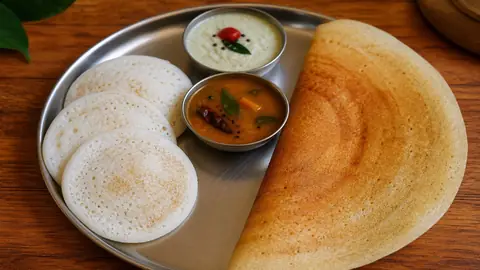 Set dosa - small and fluffy, but how many?
Three soft set dosas look tiny, but they add up to about 350 kcal - more than one plain dosa. Each fluffy piece soaks up its own spoon of oil, and three spoons add up fast.
 Sev puri - the sev is the story
A plate of sev puri is about 171 kcal, and almost half of that comes from the fried sev and fried puris. Eat less sev and swap the sweet chutney, and the same plate drops to about 108 kcal.
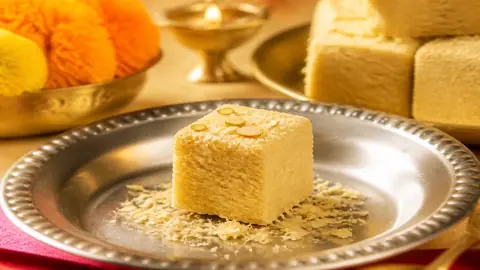 Soan papdi feels light but hides sugar and ghee
Soan papdi looks airy and light, but one small cube is about 110 kcal, mostly sugar and ghee. Eat four cubes at a festival and you have had over 440 kcal before the main meal even starts.
Why do I crave sugar so badly — and 3 easy fixes
It is not weakness. Your sugar craving is usually low sleep, a skipped meal, or plain habit — and three simple swaps can calm it down.
Three sweet chais a day - the sugar you don't see
Three cups of sweet chai a day sounds harmless, but two spoons of sugar in each cup adds up to about 2,000 kcal in a week - close to a quarter kilo of body fat. Cut the sugar one spoon at a time, add elaichi or ginger, and keep the chai.
Sweet lassi or salted chaas - a big calorie gap
A tall sweet lassi is about 286 kcal, but a tall salted chaas is only about 120 kcal - a 166 kcal gap between two cool dahi drinks. Chaas is your daily friend; sweet lassi is really a dessert in a glass.
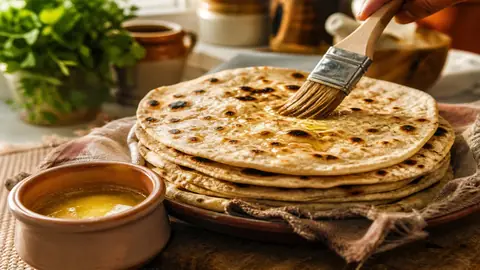 That butter brush on tandoori roti - does it matter?
One swipe of butter on a tandoori roti adds about 70 kcal - quietly. Eat four buttered rotis and the brush alone is nearly 290 kcal, almost two extra rotis. Ask for dry rotis and dab a little butter on just one, and you keep the aroma without the hidden load.
Thandai - festive, cold, and richer than you think
Thandai tastes light and cold, but one homemade glass is about 380 kcal - most of it fat from full-fat milk and nuts, plus sugar. Stick to one glass, try the lighter faraal version, or pour a half glass and enjoy Holi without the calorie surprise.
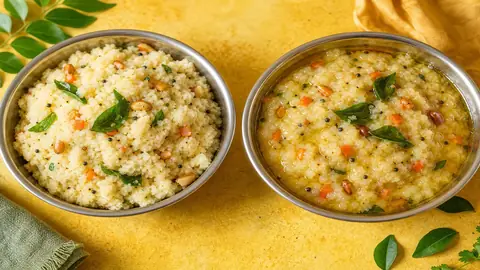 Upma - light rava breakfast or oily trap?
A light home upma is only about 190 kcal a bowl. But two or three spoons of oil in the tempering can push the same bowl past 400 kcal - rava is light, the oil decides.
 Uttapam - a lighter breakfast than dosa?
A homemade onion-tomato uttapam is about 92 kcal per piece, while a plain dosa is about 133 kcal, because the uttapam's thick body means less surface oil and the veg topping adds filling bulk for almost no calories. Swap two dosas for two uttapams and you save roughly 80 kcal without eating less food.
 Vada pav, samosa pav or dabeli - which is lightest?
Compare three Mumbai grab-and-go snacks and the lightest one may surprise you. One vada pav is about 160-200 kcal, while a samosa pav can hit 380 - so the smaller pick saves you nearly 200 kcal.
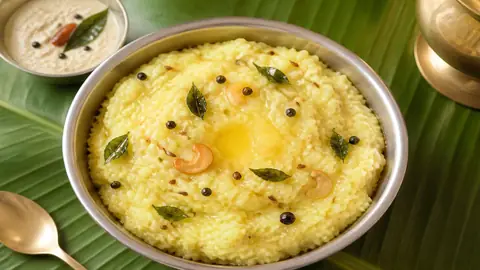 Ven pongal - comfort food, but ghee runs the show
Ven pongal is mostly rice and moong dal, and those are light - a normal home bowl is about 210 kcal. The extra ghee is what turns it rich, and a heavy-ghee dhaba bowl can climb past 330 kcal.
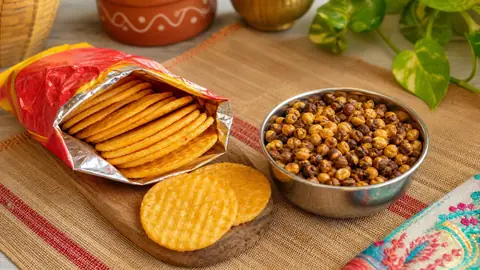 One packet of wafers: the mindless munch
A small 30g packet of wafers or Kurkure packs about 165 kcal, and it is gone in two minutes because it is mostly air and salt. Per 100g these snacks are as calorie-dense as deep-fried sev, so a big bag adds up fast.
Why the scale jumps 1-2 kg overnight
The scale can jump 1-2 kg in a single night, and almost none of it is fat. To gain 1 kg of real fat you would need about 7700 kcal above what you burn - impossible in a day. The overnight jump is water, salt, stored sugar (glycogen) and food still moving through you. Wait a few days before you worry.
Monday scale shock after the weekend
Monday morning after a wedding or a big Sunday can show 1-2 kg more on the scale. It feels like disaster, but it is mostly water. Extra salt holds water, and extra carbs refill your glycogen stores - which bind 3-4 g of water per gram. To gain 2 kg of real fat you would need about 15,000 extra kcal, which a weekend cannot do.
Should you weigh every day? The scale bounces, the truth doesn't
The scale can jump 1-2 kg in a single day, but that is mostly water from carbs and salt, not new fat. Weighing once a week (or taking a weekly average) shows the real trend and keeps you far calmer.
Why did my weight loss suddenly stop?
A plateau is when the scale stays flat for two to three weeks even though you are still on plan. It is almost always water hiding real fat loss, your smaller body burning fewer calories, and a small metabolism dip - not a broken diet. Hold the plan for three weeks before you change anything.
Why losing weight gets harder as you go
You lost well for a few weeks, then the scale got stuck. A lighter body burns a little less, so the same effort now moves less weight — small tweaks and patience win it.
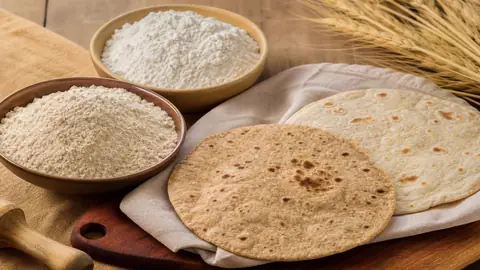 Wheat roti vs maida - does it change your weight?
Per bite, wheat atta and maida are almost the same in calories - atta is about 370 kcal per 100 g and maida about 364. So maida is not secretly more fattening. The real difference is fibre: wheat atta has about 10 g of fibre per 100 g, while maida is refined and has most of it removed. That fibre keeps you full longer, so wheat helps you eat less through the day.
Stuck for days, then a sudden drop - why?
Sometimes the scale sits flat for days, then drops a whole kilo overnight - the 'whoosh'. It does not mean you lost that fat all at once. You were losing fat the whole time, but water was sitting on top of it, hiding the drop. When the water finally releases, the scale catches up in one go.
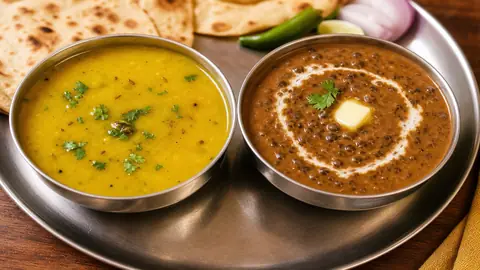 Yellow dal vs dal makhani - the quiet gap
A simple home bowl of yellow dal is about 225 calories, while a dhaba dal makhani bowl can cross 350. The same-sized katori swings by over a hundred calories, and most of that gap is butter and cream, not the lentil.
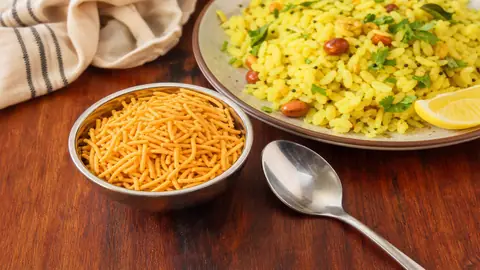 Aloo bhujia: the sprinkle that quietly becomes handfuls
Aloo bhujia looks tiny on a spoon, but a half-cup you nibble with tea is about 280 kcal of fried besan and oil. Measure one tablespoon, close the packet, and the sprinkle stays a small sprinkle.
 Aloo bonda and batata vada - twins in hot oil
Aloo bonda and batata vada are the same deep-fried potato snack with two names, and two pieces plus a sweet chai come to about 380 kcal. Eat one piece, air-fry it, and skip the sugar in your chai to cut that tea-time snack roughly in half.
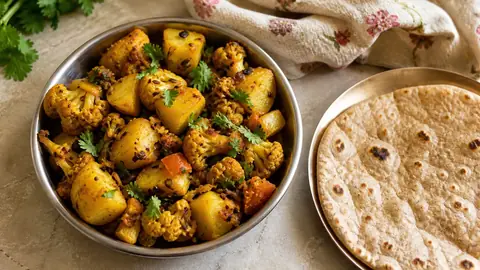 Dry aloo gobi - lighter than you think?
A katori of dry aloo gobi can be a light, friendly dish - the cauliflower and potato are almost free, and a small spoon of oil keeps one serving near 115 kcal. The quiet calorie thief is the oil, which can push the same katori past 270 kcal in a dhaba-style cook.
 Aloo tikki chaat - shallow-fried but still heavy?
A Delhi-style aloo tikki chaat plate runs close to 750 kcal because the patties are deep-fried and soaked in oil, then loaded with sweet chutney and sev. A tawa-light version at home with brushed oil, green chutney and less sev brings the same plate to about 360 kcal.
 Stuffed kulcha - is it bread or a full meal?
One loaded Amritsari kulcha is about 480 kcal - that is more than a plate of two rotis and a katori of sabzi, so it is not just a piece of bread. The flour shell, the potato stuffing, and the butter on top together turn it into a full meal.
 Appam and stew - is coconut the catch?
Two soft appams with a katori of coconut-milk vegetable stew is about 540 kcal, and most of those calories live in the stew, not the appam. Swap to thin coconut milk and the same Kerala breakfast drops to near 410 kcal.