Burnie Academy
1255 short, honest guides to Indian food and weight loss. No fake precision — every calorie figure traces to a named source.
Read. Ask. Save.
See the app guide for asking about articles, liking useful reads and saving them for later.
Read every article for free
Register with your mobile number and OTP. Use the same number in the Burnie app to keep your profile, likes and favourites together.
 Resistance band home workout for Indians: cheap full-body burn
A set of loop resistance bands and a door anchor costs less than one month of a gym, packs flat in a drawer, and trains your whole body at home. A band circuit burns about 105-175 kcal in 30 minutes for a 70 kg person, but the real win is muscle and BMR (the calories you burn just sitting). This article gives you the kit, a full-body circuit, honest burn numbers, and a myth-bust on whether bands build real strength.
Resistance band home workout for Indians: cheap full-body burn
A set of loop resistance bands and a door anchor costs less than one month of a gym, packs flat in a drawer, and trains your whole body at home. A band circuit burns about 105-175 kcal in 30 minutes for a 70 kg person, but the real win is muscle and BMR (the calories you burn just sitting). This article gives you the kit, a full-body circuit, honest burn numbers, and a myth-bust on whether bands build real strength.
 Stairs workout: calories burned climbing your apartment building
Climbing the stairs in your apartment block burns about 3 times more calories per minute than a flat walk, because lifting your body weight upward is hard work. A 70 kg person ascending steadily burns roughly 240-325 kcal in 30 minutes, and about 100-110 kcal in a 10-minute climb. It is free, needs no gear, and uses the big leg muscles that raise your resting burn. The catch is that 30 minutes of stairs is tough on legs and lungs, and going down fast is hard on knees, so the smart way is 10-15 minutes up and the lift down.
Stairs workout: calories burned climbing your apartment building
Climbing the stairs in your apartment block burns about 3 times more calories per minute than a flat walk, because lifting your body weight upward is hard work. A 70 kg person ascending steadily burns roughly 240-325 kcal in 30 minutes, and about 100-110 kcal in a 10-minute climb. It is free, needs no gear, and uses the big leg muscles that raise your resting burn. The catch is that 30 minutes of stairs is tough on legs and lungs, and going down fast is hard on knees, so the smart way is 10-15 minutes up and the lift down.
 Yoga calorie burn: the honest truth for Indians
Yoga is a beautiful daily habit, but it is not a big calorie burner. A 70 kg person burns about 115 kcal in 30 minutes of gentle yoga, about 125 kcal in vinyasa flow, and 100-260 kcal in surya namaskar depending on speed and jumps. The real wins of yoga are flexibility, stress relief, mobility, and that you will actually do it every day. For weight loss, pair yoga with a daily walk and honest food logging.
Yoga calorie burn: the honest truth for Indians
Yoga is a beautiful daily habit, but it is not a big calorie burner. A 70 kg person burns about 115 kcal in 30 minutes of gentle yoga, about 125 kcal in vinyasa flow, and 100-260 kcal in surya namaskar depending on speed and jumps. The real wins of yoga are flexibility, stress relief, mobility, and that you will actually do it every day. For weight loss, pair yoga with a daily walk and honest food logging.
 Chai and coffee calories: the sugar and milk load
A small cutting chai with 2 tsp sugar and milk gives about 80-100 kcal, and 3-4 cups a day add up to 240-400 kcal, almost a full meal. The load is not the tea or coffee, it is the sugar and milk you pour in. Here is how to see it and cut it.
Chai and coffee calories: the sugar and milk load
A small cutting chai with 2 tsp sugar and milk gives about 80-100 kcal, and 3-4 cups a day add up to 240-400 kcal, almost a full meal. The load is not the tea or coffee, it is the sugar and milk you pour in. Here is how to see it and cut it.
 Cheap protein in an Indian diet: best sources per rupee and calorie
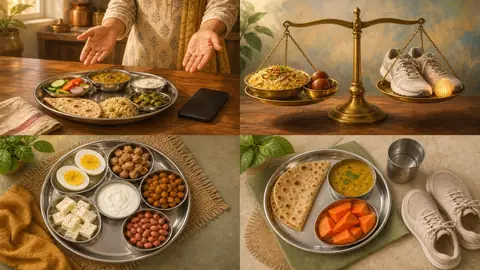
Protein keeps you full and protects your muscle and BMR while you cut calories. The cheapest Indian sources per calorie are soya chunks, eggs, chana, rajma and dahi; chicken leads if you eat meat. Paneer is protein-rich but calorie-dense from fat, so it is not the best protein-per-rupee or per-calorie choice.
Cheap protein in an Indian diet: best sources per rupee and calorie
Protein keeps you full and protects your muscle and BMR while you cut calories. The cheapest Indian sources per calorie are soya chunks, eggs, chana, rajma and dahi; chicken leads if you eat meat. Paneer is protein-rich but calorie-dense from fat, so it is not the best protein-per-rupee or per-calorie choice.
 Dal and sabzi: how cooking changes the calories
Plain cooked dal is light, about 160-180 kcal per katori, and a steamed sabzi is just 35-50 kcal. But the same dal becomes 350-420 kcal once you add 2-3 tablespoons of oil or ghee for tadka, and the same sabzi jumps by about 240 kcal when it is cooked in oil. The cooking method, not the food, changes the calories the most.
Dal and sabzi: how cooking changes the calories
Plain cooked dal is light, about 160-180 kcal per katori, and a steamed sabzi is just 35-50 kcal. But the same dal becomes 350-420 kcal once you add 2-3 tablespoons of oil or ghee for tadka, and the same sabzi jumps by about 240 kcal when it is cooked in oil. The cooking method, not the food, changes the calories the most.
 Indian breakfast calories: poha, idli, dosa, paratha swaps
A plate of poha, two idli, two dosa, two paratha, one bowl upma or two puri with bhaji can land anywhere from about 150 to 750 kcal. The big swing is not the rice or wheat, it is the oil and ghee you add, and the coconut chutney on the side. This guide gives honest per-plate ranges for the most common Indian breakfasts and the simplest swaps to keep your deficit without giving up the food you love.
Indian breakfast calories: poha, idli, dosa, paratha swaps
A plate of poha, two idli, two dosa, two paratha, one bowl upma or two puri with bhaji can land anywhere from about 150 to 750 kcal. The big swing is not the rice or wheat, it is the oil and ghee you add, and the coconut chutney on the side. This guide gives honest per-plate ranges for the most common Indian breakfasts and the simplest swaps to keep your deficit without giving up the food you love.
 Cooking oil and ghee: the hidden calories in Indian food
Every teaspoon of cooking oil or ghee adds about 45 kcal to your meal, and a typical Indian sabzi or tadka hides 270-400 kcal in oil alone. Mustard oil, groundnut oil, coconut oil, ghee and olive oil all sit at 884-900 kcal per 100g, so a 'healthy' oil has the SAME calories as a refined one. The real lever for a calorie deficit is less oil, not a different oil.
Cooking oil and ghee: the hidden calories in Indian food
Every teaspoon of cooking oil or ghee adds about 45 kcal to your meal, and a typical Indian sabzi or tadka hides 270-400 kcal in oil alone. Mustard oil, groundnut oil, coconut oil, ghee and olive oil all sit at 884-900 kcal per 100g, so a 'healthy' oil has the SAME calories as a refined one. The real lever for a calorie deficit is less oil, not a different oil.
 Indian restaurant calories: dishes that load you up, and lighter picks
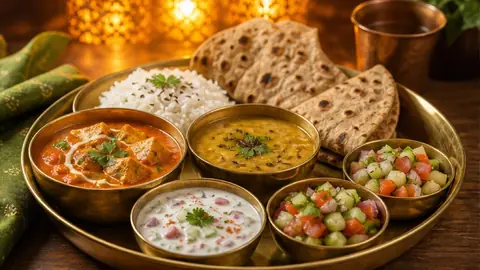
Indian restaurant food is not fattening by nature. It is dense because restaurants add a lot of butter, cream, ghee and oil, and serve big portions. Learn which dishes load you up (dal makhani, butter chicken, biryani, butter naan) and which are lighter (tandoori, dal tadka, plain roti) so you can eat out and still keep your calorie deficit.
Indian restaurant calories: dishes that load you up, and lighter picks
Indian restaurant food is not fattening by nature. It is dense because restaurants add a lot of butter, cream, ghee and oil, and serve big portions. Learn which dishes load you up (dal makhani, butter chicken, biryani, butter naan) and which are lighter (tandoori, dal tadka, plain roti) so you can eat out and still keep your calorie deficit.
 Calories in Indian snacks: samosa, namkeen and swaps
Indian snacks look small but hide a lot of calories because most are deep-fried. One samosa is about 250-300 kcal, a small bowl of namkeen is about 250-280 kcal, and murukku is over 500 kcal per 100g. The reason is oil: it has 900 kcal per 100g and soaks right in. This article shows the numbers and gives you lighter Indian swaps that still taste good.
Calories in Indian snacks: samosa, namkeen and swaps
Indian snacks look small but hide a lot of calories because most are deep-fried. One samosa is about 250-300 kcal, a small bowl of namkeen is about 250-280 kcal, and murukku is over 500 kcal per 100g. The reason is oil: it has 900 kcal per 100g and soaks right in. This article shows the numbers and gives you lighter Indian swaps that still taste good.
 Calories in Indian sweets: a sane festival guide
Indian mithai is dense because it is built from sugar (about 3.9 kcal per gram) and ghee (about 876 kcal per 100g), then soaked in sugar syrup. One gulab jamun is about 150 kcal, a jalebi piece about 150-180 kcal, and a rasgulla about 120-150 kcal. This guide gives honest per-piece estimates and a festival plan that does not break your deficit.
Calories in Indian sweets: a sane festival guide
Indian mithai is dense because it is built from sugar (about 3.9 kcal per gram) and ghee (about 876 kcal per 100g), then soaked in sugar syrup. One gulab jamun is about 150 kcal, a jalebi piece about 150-180 kcal, and a rasgulla about 120-150 kcal. This guide gives honest per-piece estimates and a festival plan that does not break your deficit.
 Rice portion control: the katori is your real unit
A katori of cooked white rice is about 150g and 200 kcal, and most Indian plates pile 2-3 katori, so rice alone gives 400-600 kcal. The simple lever is one katori rice with double sabzi or dal, which keeps you full and saves about 400 kcal a meal. This guide shows the katori maths, the dry-to-cooked weight trick, and why the rice variety barely matters next to the katori size.
Rice portion control: the katori is your real unit
A katori of cooked white rice is about 150g and 200 kcal, and most Indian plates pile 2-3 katori, so rice alone gives 400-600 kcal. The simple lever is one katori rice with double sabzi or dal, which keeps you full and saves about 400 kcal a meal. This guide shows the katori maths, the dry-to-cooked weight trick, and why the rice variety barely matters next to the katori size.
 Roti vs rice: calories, satiety and the deficit verdict
One medium whole-wheat roti gives about 100 kcal, a 150 g katori of cooked white rice about 195 kcal, and brown rice about 185 kcal. Brown and white rice are nearly equal in calories; the real difference is fibre and glycaemic index. Roti is more filling because it has far more fibre and protein. In a calorie deficit, portion size matters more than which grain you pick.
Roti vs rice: calories, satiety and the deficit verdict
One medium whole-wheat roti gives about 100 kcal, a 150 g katori of cooked white rice about 195 kcal, and brown rice about 185 kcal. Brown and white rice are nearly equal in calories; the real difference is fibre and glycaemic index. Roti is more filling because it has far more fibre and protein. In a calorie deficit, portion size matters more than which grain you pick.
 Building muscle to raise your BMR - the honest number
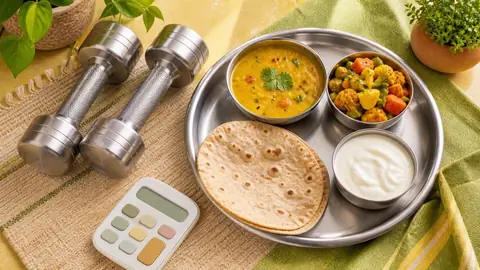
Muscle does burn more at rest than fat, but the famous '50 kcal per pound of muscle' is a myth. The honest, reviewed figure is about 13 kcal per kg of muscle per day, so 2-3 kg of muscle adds only 25-40 kcal/day. Worth it for strength and shape, not a shortcut past the deficit.
Building muscle to raise your BMR - the honest number
Muscle does burn more at rest than fat, but the famous '50 kcal per pound of muscle' is a myth. The honest, reviewed figure is about 13 kcal per kg of muscle per day, so 2-3 kg of muscle adds only 25-40 kcal/day. Worth it for strength and shape, not a shortcut past the deficit.
 Coffee and green tea - do they really boost metabolism
Coffee and green tea give a small real thermogenic bump — about 4% more daily burn and modest extra weight loss over weeks. Sugar-loaded versions undo the benefit.
Coffee and green tea - do they really boost metabolism
Coffee and green tea give a small real thermogenic bump — about 4% more daily burn and modest extra weight loss over weeks. Sugar-loaded versions undo the benefit.
 Cardio vs weights - which burns more calories
Cardio burns more calories in the session. Weights build muscle that keeps your BMR up over time. Best is both - cardio for today, weights for the long game.
Cardio vs weights - which burns more calories
Cardio burns more calories in the session. Weights build muscle that keeps your BMR up over time. Best is both - cardio for today, weights for the long game.
 How many calories do 10,000 steps really burn
For a typical 70 kg adult, 10,000 steps burn roughly 300-400 kcal at a normal pace. That is real and useful for a deficit, but modest. Steps are a habit, not a magic number. Log them, stay consistent, and do not eat them all back.
How many calories do 10,000 steps really burn
For a typical 70 kg adult, 10,000 steps burn roughly 300-400 kcal at a normal pace. That is real and useful for a deficit, but modest. Steps are a habit, not a magic number. Log them, stay consistent, and do not eat them all back.
 The 'afterburn' effect - how big is it really
EPOC, the 'afterburn' after exercise, is real but small - about 6-15% of the calories you burned during the workout, often under 100 kcal. It is not a magic extra burn that pays for a heavy meal.
The 'afterburn' effect - how big is it really
EPOC, the 'afterburn' after exercise, is real but small - about 6-15% of the calories you burned during the workout, often under 100 kcal. It is not a magic extra burn that pays for a heavy meal.
 HIIT - time-efficient, but not calorie magic
HIIT burns about the same calories as moderate cardio in less time. The famous 24-hour afterburn is real but small, about 6-15% extra. Pick what you will stick with.
HIIT - time-efficient, but not calorie magic
HIIT burns about the same calories as moderate cardio in less time. The famous 24-hour afterburn is real but small, about 6-15% extra. Pick what you will stick with.
 Six small meals vs three - does it boost metabolism
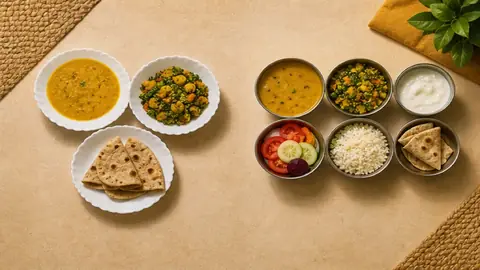
Six small meals don't burn more than three. TEF follows your total daily food, not how you split it. Pick the pattern you can stick to and stay in your deficit.
Six small meals vs three - does it boost metabolism
Six small meals don't burn more than three. TEF follows your total daily food, not how you split it. Pick the pattern you can stick to and stay in your deficit.
 The hidden calorie burn you're missing - NEAT
NEAT is calories you burn from daily movement - standing, walking, chores - not workouts. For sedentary Indians it can add 300-400 kcal/day, often beating the gym.
The hidden calorie burn you're missing - NEAT
NEAT is calories you burn from daily movement - standing, walking, chores - not workouts. For sedentary Indians it can add 300-400 kcal/day, often beating the gym.
 Protein and lifting - keeping the muscle that keeps your BMR
Muscle needs lifting plus protein - about 1.2-1.6 g/kg/day, above the 0.8 RDA. In a deficit, higher protein keeps your muscle, and your muscle keeps your BMR.
Protein and lifting - keeping the muscle that keeps your BMR
Muscle needs lifting plus protein - about 1.2-1.6 g/kg/day, above the 0.8 RDA. In a deficit, higher protein keeps your muscle, and your muscle keeps your BMR.
 Why protein burns more calories to digest
Protein costs the most calories to digest, about 20-30% of its own calories versus near zero for fat. A small, honest reason extra protein helps in a deficit.
Why protein burns more calories to digest
Protein costs the most calories to digest, about 20-30% of its own calories versus near zero for fat. A small, honest reason extra protein helps in a deficit.
 Why your metabolism drops with age - and how to fight it
Your metabolism dips as you get older mostly because you slowly lose muscle and move less, not because your cells mysteriously slow down. From your 30s you shed muscle every decade unless you actively use it, and that lost muscle quietly lowers your BMR. Lifting weights and eating enough protein fights it at any age.
Why your metabolism drops with age - and how to fight it
Your metabolism dips as you get older mostly because you slowly lose muscle and move less, not because your cells mysteriously slow down. From your 30s you shed muscle every decade unless you actively use it, and that lost muscle quietly lowers your BMR. Lifting weights and eating enough protein fights it at any age.
 Does your body fight weight loss? The honest truth
Your body does push back when you lose weight — BMR dips ~30-120 kcal/day and hunger rises. But this is a flexible adaptation, not a fixed trap. Keep muscle, hold a modest deficit, stay consistent, and the deficit still does the work.
Does your body fight weight loss? The honest truth
Your body does push back when you lose weight — BMR dips ~30-120 kcal/day and hunger rises. But this is a flexible adaptation, not a fixed trap. Keep muscle, hold a modest deficit, stay consistent, and the deficit still does the work.
 How poor sleep quietly lowers your metabolism
Short sleep slightly lowers resting burn and raises hunger, so you eat more next day. Aim for 7-9 hours - it supports your deficit, not a food-control swap.
How poor sleep quietly lowers your metabolism
Short sleep slightly lowers resting burn and raises hunger, so you eat more next day. Aim for 7-9 hours - it supports your deficit, not a food-control swap.
 Chilli, ginger, spices - do they boost metabolism
Capsaicin in chilli adds about +50 kcal/day in studies, fading with regular use. Tasty and Indian-friendly, but not a real fat-loss plan - the deficit does the work.
Chilli, ginger, spices - do they boost metabolism
Capsaicin in chilli adds about +50 kcal/day in studies, fading with regular use. Tasty and Indian-friendly, but not a real fat-loss plan - the deficit does the work.
 Standing vs sitting - does it really burn calories
Standing burns ~9 kcal/hour more than sitting - about 70 kcal over a desk day. Helps posture and blood sugar, not fat loss. Real burn comes from moving.
Standing vs sitting - does it really burn calories
Standing burns ~9 kcal/hour more than sitting - about 70 kcal over a desk day. Helps posture and blood sugar, not fat loss. Real burn comes from moving.
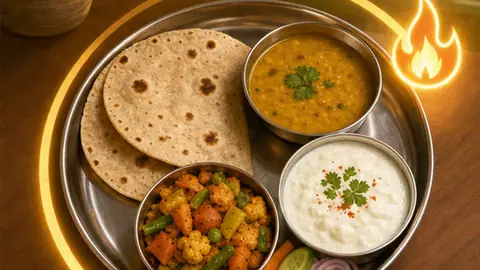 The thermic effect of food - calories you burn just eating
About 10% of the calories you eat get burned just digesting and processing that food. Protein nudges it up a little, but it is a small lever - the deficit does the work.
The thermic effect of food - calories you burn just eating
About 10% of the calories you eat get burned just digesting and processing that food. Protein nudges it up a little, but it is a small lever - the deficit does the work.
 Walking: how many calories per kilometre
Walking costs about 0.5 kcal for each kilogram of your body for each kilometre you walk. So a 70 kg person burns about 35 extra kcal per km, and about 300 kcal for 8-9 km. It is the easiest, cheapest burn most Indians can do daily.
Walking: how many calories per kilometre
Walking costs about 0.5 kcal for each kilogram of your body for each kilometre you walk. So a 70 kg person burns about 35 extra kcal per km, and about 300 kcal for 8-9 km. It is the easiest, cheapest burn most Indians can do daily.